The Swiss referendum on Sovereign Money
De Week van Bitcoin · 28 Jan 2016 · 36:31
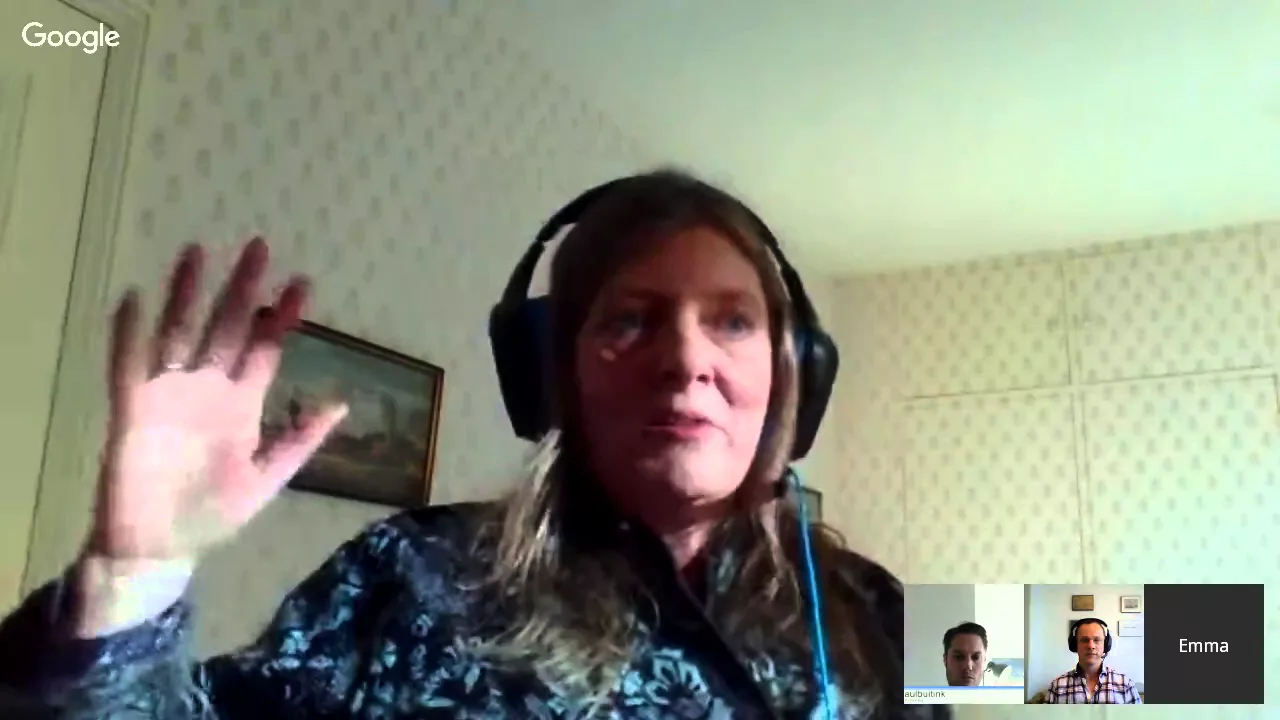
Emma Dawnay, a board member of the organisation behind Switzerland's sovereign money (Vollgeld) initiative, explains how more than 110,000 signatures triggered a national referendum, and why the proposal would let only the Swiss National Bank create money, with banks acting as intermediaries. She describes how it relates to Positive Money and the international monetary reform movement, her path from molecular electronics research to monetary reform, and the campaign to explain how banks create money.
Speakers
Topics
From De Week van Bitcoin; community: Reinvent Money.
Transcript
hi good afternoon everyone and welcome to this episode of reinvent money I'll be hosting today with Paul batting yesterday we had a great discussion with Ben Dyson and Dominic frisbee we learned a lot about their ideas about monetary reform and we particularly talked a lot about the positive money movement today we'll be we'll be interviewing Emma Donnie welcome Emma hi and emma is from a related initiative in in Switzerland and we look very much forward to talking to you today so maybe we should start because you actually have a pretty
interesting background because you've started as a PhD in molecular electronics and then where a scientific researcher for quite a few years what brought you to monetary activism what got you excited about that well as you say I done a PhD even I was working in R&D in a technology company and it was at the time when the dot-com boom was really taking off and at the same time I started doing a part-time MBA when I was being taught finance and economics and I what I was being taught and what I was experiencing was so far apart because my
company floated on the stock exchange went straight into the footsie 100 index with a market capitalization the same as British Airways and we only had about 700 people and a few ideas basically and at the same time I was being taught about efficient market hypothesis and it just didn't make sense to me and the more it didn't make sense to me the more interested I got and that really led me to take a completely different path and then I worked for a while at the New Economics foundation in London where I I did a report on behavioral economics and then I and this
same time I came across the ideas of monetary reform and I met James Robertson who was one of the people who wrote very you know early on about how the banking system worked and I I really wanted to get a project off the ground in 2005 but it was nobody was interested in 2005 everything was going swimmingly so that didn't happen hunter say yeah then my life changed again because my daughter arrived I had a baby and I sort of rather missed the financial crisis with them being at home but then I found
myself living in Switzerland and I was very very happy to discover that there was really exciting stuff going on in Switzerland so and now I'm a board member of monetary modern modernize Ihram which is the organization the NGO that is bringing the swiss sovereign money initiative okay maybe you could tell us a little bit about what what this what this initiative is and what your relation is with positive money who we spoke to yesterday maybe a bit of the history of it yeah and I think I mean after the financial crash what what happened I mean in both the UK and in
Switzerland as people got more interested in banking and the two organizations developed completely independently in Switzerland hands Rudy Weber is the founder of the organization and he read the book written by James Robertson and jozef Huber that have recently been translated into German and he started this this NGO realizing that Switzerland was in a unique position because of its the direct democracy and of course since then we've linked up with positive money and you know we we communicate often and as now the
international movement for monetary reform and which which positive money has helped to set up and that then so we're all a part of that and we help each other but we are sort of independent organizations and which I can't you want very similar feelings yours yes yes yes so to explain a bit about how the the the system of direct democracy in Switzerland absolutely I think that would be very useful yeah yeah so what and what it is in Switzerland and there's a written constitution and if one hundred thousand people sign up to a change in the
Constitution there will be a national referendum and that is that's what hands Rudy Weber realized that Switzer was in the special position because we could initiate this referendum so first of all he got together a small group of experts mainly university professors to write a new text for the constitution which is written and then we had a year and a half's time to collect these signatures so we've all been out on the street and I'm stopping people talking about monetary reform which is quite interesting because it's quite a difficult topic to bring on a street
corner in the rain and things but but you know we've managed that and soap you know 100,000 people actually over 110,000 people have signed up to have this referendum and the Swiss authorities have confirmed that they have the right number of signatures so this will happen it takes a while in Switzerland because it has to be discussed by the Federal Council and then by both houses of parliament so it's very likely to be in about three years time possibly possibly only one year if everything is really quickly what's the longer so it takes a while it's like 8 million people living in Switzerland
right so 110,000 signatures it's like it's almost 1/2 percent it's not bad for such a difficult topic yeah yeah yeah oh it was and it does require quite a lot of hours of people standing outside and you know we were we managed to get quite a lot of people involved actually to help do that and and you know very beginning I was a bit doubtful were we going to make it or not but actually no in the end we made it quite easily and what exactly are the legal implications of so in a lot of countries referendums are sort of you know sort of suggestions for something
for the government to talk about in the Netherlands we have referendums and I think their legal status is that politicians can ignore them if they like so what exactly does it mean if the voters accept a proposal like yeah the people say what people have signed up to is a particular change in the text of the constitution and on the voting paper there will be this this text this proposed text for the change the constitution if people vote in favour it's not like a suggestion or a proposal or something it will happen it will happen so that it is binding on the you
know the Swiss government to bring it in if people you know so if we get them it needs over fifty percent of the vote and over 50% of the Canton's to come into existence it doesn't the Constitution already read that it is up to the Swiss Confederation to create money it's it says it's quite literary in the Constitution does however with especially with sort of electronic banking and things and the banks always manage to give out book money and then of course with electronic money this has become
more and more so that now 90% of the money in circulation is actually doesn't come from the Swiss National Bank it comes from the banks when they make loans and so this is the same as what um I know Ben Dyson was discussing yesterday when somebody goes to the bank to get a loan this this money is created by the bank and the person gets the loan and the bank has the asset which is mortgage or whatever it is the person's
lent or at the money for and this is this is just the banks can create money supply and this is yeah it's you could read the Constitution say hang on a minute but it should be the case that it's already not allowed but clearly it's happening so in this reworking of the Constitution we make it absolutely clear that only the Swiss National Bank can bring in the money supply and the banks would work as intermediaries so when you mentioned earlier so I think that's important for our viewers to know so it's not just fifty percent of the popular vote it's more so within every Kent on is it correct that you need at
least fifty yes are there in Switzerland twenty-six but some of the little ones any counters half so it's it's a little bit a little bit more complicated but you know so there's some in each area in switzer you know one area in Switzerland imposing their will on another area and Swiss and is the idea and so what so that's an important question I think because so last year I think it was in Paul you probably remember exactly I'm not sure when it was but there was this initiative in Switzerland for the central bank to have a certain amount of its assets in gold yes and that didn't that didn't succeed what do you think the chances of success for your proposal
are and and and what are you doing and what's your strategy in order to ensure well it's um it's clearly it's going to be quite a big challenge and our strategy at the moment we're trying to get into as many different groups as we can so that we're trying to you know promote the ideas and educate people because so many people don't understand how the banking system works so we're trying to get in to say you know groups of lawyers groups of doctors groups of you know it looks like that and we'll also have it trying to get actions in each individual canton so we're sort of
trying to sort of cat society in different ways if you like and you know have an action group for each of these different ways to Raiders that supported your argument that people have no clue in Switzerland like already been Dyson said yesterday yes not only the politicians but the people on the street and in in Switzerland what's the percentage of people that think that banks just borrow and lend instead of create yeah is it and I think it's was it seventy-eight percent or something um says yes most people don't realize that that the banks are the bring the money into being most people believe that the Swiss National
Bank at least has got something to do with it which which it hasn't and in the same survey had a very positive result I think at the end of the survey which was properly randomized with more than a thousand people being asked and the end of the survey they were asked if they would vote for the four girls for the Swiss sovereign money initiative and I believe 57 percent said yes so when you so you've done this a lot on on the street so how do people react when you tell them how it really works I think quite a lot of people since since sort of the crash ins you know with one of
the big banks and Switzer that had to be bailed out after you know 2008 or something so that a lot of people are aware of that sort of thing so that they're you know quite a lot of people feel that something isn't quite working right in the banking sector so I would say that you know sort of pretty positive and and you've always got the case that you know when you're doing out on the streets you know it's almost most people are sort of too busy to stop and talk but of the ones that are willing to stop I would say that some yeah it was pretty positive but as Switzerland is famous of course for its mountains watch
this but also its banks it's it's you know in a way it's a banker nation right a lot of wealth is generated because of because of the banks you guys have and also because of the power they have and this would mean reduction of their powers a lot of people dependent legs I get to spend or is it is that maybe just elite and most common ours are not really profiting from from that circumstance yes I think I mean I think you say there is very true and it's very international I believe most of the the big banks I think all work in English which it's quite surprising because there in Switzerland is their might so they used you know they have an employ a lot of people from outside of
Switzerland and but on the other hand you know so people have said you know that this is a sort of bad for our banking sector however you know Switzerland is also very famous for its wealth management well if you've had a brought in sovereign sovereign money where you're you know you can't get a run on the bank and you can't you're unlikely to get such severe crashes well actually wouldn't a lot of more people want to bring their money into Switzerland it'd be very good for the Swiss banking sector that have the most you know stable money supply that there
is which is actually legal tender so there's an argument that actually it could benefit the banking sector it would be very interesting to see I think when because you know we were speaking about that yesterday with with Ben and Dominic as well I asked him you know which which country would you hold up as an example for how things should go and then they said well they all kind of worked the same so it would be very interesting to see you know a place like Switzerland succeed and have a very different system to see what kind of reaction that that brings and you know perhaps indeed a lot of money we'll start doing a blot of sorry a lot of people will start doing their banking in Switzerland I think it would be very very interesting now maybe like Iceland
this is probably the first country to because they are of course even much smaller than Switzerland and they're also a bit further in the process of perhaps getting this implemented because the pirate party is their leading the leading party in the polls and the pirate parties is supporting sovereign money as well so maybe isin't contested at first so we finally have laboratory where we can test these types of monetary models but then of course it's possible if it's become successful Iceland that the financial powers would squash the initiative or would try to speculate against this floor of currency in Iceland putting a lot of pressure under on the government and the people to make it feel in a way I mean they will not give given easily of course
people with vested interests so it's it's maybe it's good to not be the first country to implement this and maybe wait until we don't have a choice and you know we will obviously sort of you know go with what we've got so there's a you know the the the you know for us the process is now sort of you know with you know the Swiss authorities and so there's some yeah well well we'll do our best with the referendum you know whether Iceland has got there before or not I just wondering and we haven't actually said in detail sort of what it is should we explain a bit more about
there some sure and but just so at the moment I've already mentioned that the the it's the banks that bring in 90% of the money in circulation so the idea of this change to the Constitution is that only the Swiss National Bank can bring money into circulation and they can do this by one of two methods they can provide money to be spent into the economy or they can lend banks money so that they have quite a bit of flexibility so you know the
sort of the spending would be this sort of that they would estimate how much growth rate in the economy and then you'd want the money supply to grow roughly the same as the growth in the economy so you probably spend that into the economy but the fine-tuning would be done by by the lending and the Swiss National Bank would have a mandate to operate in the interests of Switzerland as a whole and it wouldn't be answerable to politicians but if it if it didn't fulfill its mandate and obey the laws that come from the Constitution you know then somebody could take it to court and
complain that it's not doing its job so that the Constitution is sort of you know above the you know it's that the the highest thing in the country which everybody's got to obey and that's it so the Swiss National Bank wouldn't have any say how the money is spent into the economy that would be up to the politicians they just say how much and the politicians then can choose whether they want to lower people's taxes or whether they want to spend it on public public works or whether they want to give it out as a citizens dividend
whatever but wouldn't that create a lot of indirect pressure on on the central bankers to I mean if I were a politician I'd certainly I'd certainly enjoy having more money than than less so doesn't this indirectly create I mean who has oversight on this on this process right so you can take the you can take the central bank to court but I mean there's a you know I mean what what is in the public interest and what the central bank should do and what politicians should do is a very broad concept so how well do you think they can be held accountable in this system I I feel I mean sort of what comes out of
Constitution will be various laws about how exactly they're going to organize organize it so that isn't up to us and and I think that's you know you've just got to make this separation very very clear and when you're looking into the laws I would say I mean I'm entirely speculating here but it'd be quite possible to say that you know to make sure that the Swiss National Bank can't bring too much money into existence you know perhaps that they'd even want to sort of specify and you know how much
growth there has been and you couldn't expect you know more than so much percent than what there was last year or I don't know something so actually sort of to put a real limit on it I don't know but I would feel that it it should be quite possible to you know have something which is very cut and dried so that um that you know isn't possible and you know so these Swiss National Bank can easily say you know this is in the best interests of this this is how I've got to got to carry out my work and it's not possible for the politicians to interfere with that that's already quite subjective right because by assuming that money growth should be equal to
economic growth in order to have stable pricing there is already then you build upon the assumption that stable price growth in in and of itself is a good thing because there's also of course classical economists or Austrian economists who say the amount of money doesn't really matter as long as prices can adjust so you can keep the amount of money exactly the same over over many years and then if you have more economic growth then prices will just have to just down worse and if you have less economic growth and price can adjust upwards because it's just one and side of the coin then the monetary growth you don't necessarily need growth that's what a lot of classical economists say so by by baking into how do you do that
because it's really a political decision or a choose this economic theory over other ones I sort of see what you're saying but I don't know so much about those theoretical ideas but if you're saying that the amount of money doesn't matter then it wouldn't matter keeping it in tune with growth either only or I don't of money and there's more growth that just means that the same amount of money is chasing more and more goods and services and so the price is good the service would need to go down in that money but then what's wrong with saying why would it matter if you increase the
amount of money that's inflation then well so I mean National Bank anyway has a mandate I mean then that's also like price adjustment isn't this inflation but the National Bank I mean it has a mandate on on stability of prices and which is a political decision yeah and I mean I I understand where you're coming from but it's just that a lot of these policy policies are based on economic theories and and these theories are conflicting yes so in the general
interests of the population some measures could be good for Swiss savers some other ones could be good for Swiss borrowers for example a safer and doesn't like inflation not even 0% inflation he probably prefers deflation for a borough it's the other way around so and I guess you having a big financial crash in general is is not good for anybody and had some I guess one of the you know major benefits of having a sovereign money system is that you don't have you don't have this this idea that debt and money have to be have to be the same and have to go up together absolutely yeah that sounds
that's that's very important and actually quite interesting and a lot of different schools of thought even in the Austrian school of thought where people are usually very much for currencies backed by hard assets there is also a sense in which money is at least partly an asset rather than a than a depth and I think that's I think that's a very very important idea to the transition be in in let's say at some point there's d-day when or is it going to be a smooth transition and in different stages or are you guys overnight transacted change and it would be an overnight transition
and then all of the money in people's bank accounts the next morning would be sovereign money full legal tender they could go on exactly as before I mean there's no I think as a sort of you know Swiss citizen you wouldn't notice any big change the way the accounts are done at the banks would be different so this money would be more like coins and and banknotes and it's which are which are sovereign money which are brought into existence by the Swiss National Bank and so so overnight this this money in people's bank accounts becomes like
elec electronic money which is sort of like an electronic purse that that the Swiss National Bank holds on behalf of the person who has their bank account at the bank and at the same time the the bank and you can if you look at it from the bank's perspective at the moment if you have money in the bank and it's like the bank owes you that money that that's that's you know something which if you ask for it the bank would give it to you although it's a promise to give it to you they don't know and overnight rather than the bank owing you that money it
would change to the bank owing the Swiss National Bank money so that that money is still owed but it's not it's no longer you know it's no longer to you because you have a bank account there the Swiss National Bank has is in a way sort of provided the bank with this electronic legal tender to give to you and they've taken that you know that sort of debt if you like you know so that the banks they know them so the essence of what the essence of what you want to do is you know now we have we have electronic money we have physical money we think we treat them in society like they're exactly the same thing but
they're not really they're not really the same thing what you want to do is you want to make them exactly the same thing and you basically do this overnight this is your yes yes but then once the transition has been completed then would it still be necessary for people to hold an account at the commercial bank if they just want to store the tokens or do they have to store the tokens I mean say I was what we call current accounts in English and that would be you know it would look just the same and they would still be dependent on commercial banks for payments yes so the the commercial banks would still operate the payment systems
on behalf of their customers yes but why why do we still need that payment network like for example we also have these centralized payment systems based on blockchain technology where people can just own the private keys to their tokens themselves we still need whilst you know whilst that is the system that everybody's or everybody you know a lot of people are used to then you wouldn't want to suddenly take it away from people overnight then so so I should also say that with this initiative we would we have specifically mentioned alternative currencies so currencies such as some bitcoins so they
would be allowed but whilst there's one dominant currency that's used to such an extent that if there's a crash this would you know be a major blow for Switzerland for the Swiss people then the Swiss National Bank you know needs to intervene and sort of look after this currency on behalf of you know of Switzerland and I get the figures you guys want to have your own currency you can use the technology in order to manage your own currency for example you
don't necessarily need commercial banks to manage the Swiss franc yeah yeah well then we're quite happy with people doing it any other way if there's another currency that people start using that's fine if it gets to a level when you know if a crash in this currency would cause the major problem then the Swiss National Bank would have to intervene and would you know also have the power to start you know controlling that currency however if there were several competing alternative currencies that you know no one of which would cause a major problem then that's quite right okay privacy concerns with if if people if all the cash becomes electronic
basically which you we're not saying we're not taking away and coins and banknotes that would continue as it is so you wouldn't you would not want because in Sweden for example and also another current visit there's this trend towards remove of cash from society because it's dirty and criminals use it and you name it but of course a lot of people like it because of the privacy is that something yeah it simply isn't covered by you know what we're saying is that you know with the electronic money that is used for transactions that the Swiss National Bank should bring that
into existence and control the amount in you know the amount of the money supply but we're not yeah only we don't say anything about the banknotes and and the coins so that under this change there would be no change to those and what exactly is the is the timeline for for the whole and issue when will win will Swiss voters actually vote on this proposal as I said this depends very strongly on the first of all Federal Council they have up to one year to discuss it and then they at the end of that they make a proposal as to whether
they think that it should be accepted or not and but they can do that more quickly than a year so we don't know sort of you know they might if they just discuss it at you know very soon and and then sort of handed on that time becomes shortened and then the it goes to both houses of parliament who do the same they also debate it and they have up to two and a half years but it could be quicker and then either the Federal Council or the Swiss Parliament if they want to can propose an alternative and if that's and that would also appear on the voting paper so then they're allowed more time to work out the details of
their alternative so it's quite hard to know basically because ever if F both if everybody discusses it very quickly then I it typically takes about nine or ten months to come to the referendum after the the parliament has finished discussing it but you know if alternatives start to be discussed then it can go out longer so we will have you know probably about 10 months notice of when it's going to come to referendum but we don't know that don't okay and in the role of these other bodies is they can propose alternatives yeah yeah and and they make her suggestion so when people in
Switzerland get a sort of hold booklets when there's a vote and they see what's the you know what what the suggestion the Federal Council is and what the suggestion of Parliament is and their reasoning so that's you know they can sort of you know and and they see also @xr us saying that why were were you know wanting to make this change so then people have you know it can read all of this and then make up their minds I see well maybe maybe it's a good time to see if we have some questions from the audience yeah yeah so yesterday we had a glitch with Google so people couldn't watch at life this time it's working I see people watching so if people want to ask my question and now it's the time
before we wrap up and so maybe let's just wait a little bit for that but in any case it was a very interesting story and very heartwarming it's also great to see women active in the monetary activism community where can people find more about your initiative yeah if you look I've actually I've worked I had to print it out and a mirror image so if you do a Google search on folio that's actually full WWF old gal - initiative dot CH but if you just do a search on for girls you find it or on the Swiss sovereign money supply you find it and there's quite a lot of more information
on the English pages there so I put a link also in the show notes and so I urge everyone to take a look there also please like this video share it and subscribe your channel and it's very important to us to keep on doing the work and I am again thank thanks so much we'll follow you and need to have a need to be patients because apparently we'll look like a few years but they'll probably stretch it as much as they can bye-bye then the system probably already has collapsed but minor minor crash might help us but we don't really want a major one wouldn't wish for that I'm really curious to see where I'm really curious to see where this is going I think this is very exciting I think it's
very exciting that in Switzerland I don't think it's as easy to change anything as in in other places is in Switzerland I think that's what makes it so exciting so we'll definitely keep following you and maybe have you back on the show sometime when when some changes have been been made okay well thanks take care inviting me okay