The money bubble
De Week van Bitcoin · 2 Apr 2015 · 43:56
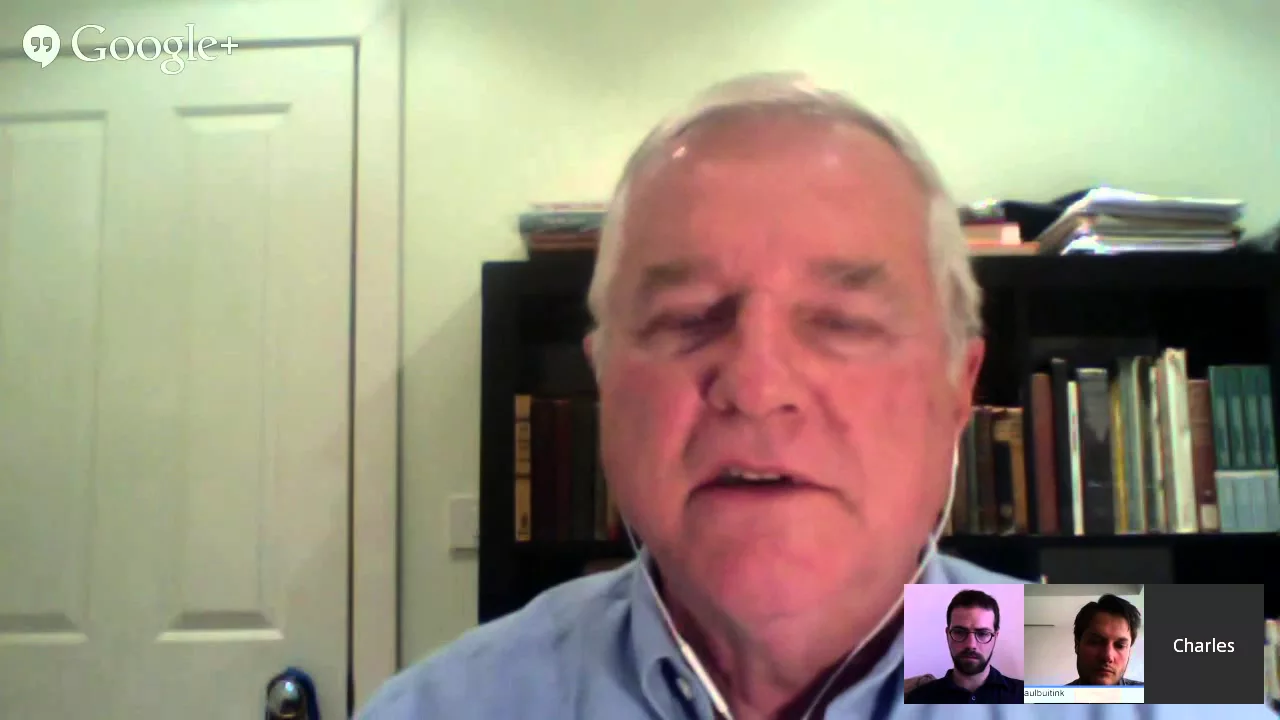
James Turk, founder of GoldMoney and author of The Money Bubble, joins hosts Paul Buitink and Tuur Demeester on Reinvent Money to explain why he calls today's paper currencies a money substitute and the mother of all bubbles. The conversation covers negative interest rates, crack-up booms, property rights, debt jubilees and holding tangible assets such as gold and silver. It closes on Bitcoin and cryptocurrencies: Turk sees Bitcoin as a brilliant innovation and an efficient currency that complements gold, and the hosts discuss how both could serve people if fiat money loses trust.
Speakers
Topics
From De Week van Bitcoin; community: Reinvent Money.
Transcript
Hi everybody. U my name is Paul Boutink and welcome to a new episode of our weekly show about the monetary revolution. With me is freerange economist tester. Hi T. And together we're going to talk with James Turk a founder of goldmoney.com and author of the collapse of the dollar and his latest book the money bubble what to do before it pops. Both books he wrote with his friend John Rubino. Uh James, before we start, I'd like to thank you for all the education you've provided me over the years and for all the trips and work we've done together when I was working for Gold Money and we also met with two a few times in the past. So those were good times. Um your latest book is an amazing and timely
read. Uh for the folks who haven't read it yet, what's the main takeaway of your latest book, The Money Bubble? Yeah, the main takeaway is that what we think today is money really isn't money in the true historical sense. It's a money substitute circulating in place of money. Money of course being gold and silver, a tangible asset. And as a consequence, um, you know, people have lost sight as to what money really is. And that's where the real bubble is. So, you know, when you when you're saying things in a bubble, like the, uh, internet bubble, everybody said, uh, profits don't matter, only market share does. When that bubble popped, everybody realized how silly that was. And then in the real estate bubble, everybody said
housing prices only go up. And in fact, we know that housing prices now go down after the after that bubble popped. So everybody who thinks that they're using money today, um, all these paper fiat currencies, after this bubble pops, they're going to realize that they're only using a money substitute and not money itself. These money substitutes are really credit um, I use. They're not anything of substance. Right. So this is this then the mother of all bubbles? Absolutely. Uh this is one that you know 100 years from now people are going to look back and shake their heads just like we look back and laugh at the South Sea bubble or the Mississippi bubble.
Wow. And what can our viewers do to um to anticipate or to protect themselves from what's for when it's going wrong? The main thing is is that you have to look through the bubble, which is often hard to do because when you're in a bubble, everybody's saying and doing the same thing. And that becomes a conventional wisdom. But just because it's conventional wisdom, that doesn't necessarily mean it's correct. So what you have to do is step back and remain objective and logical and look at what's going on around you. And just look at some of the crazy things that are going on in the market today, for example, to suggest that, you know, we've lost sight of reality and it and it is in fact a bubble. people are paying the German government to uh to take their money for 10 years. In other words, negative
interest rates. There's something like $3 trillion of government paper around the world that's uh now at negative interest rates. That's destroying capital. U it's not normal. Um aside from the fact that you still have inflation because prices of uh cost of living is going up. Um, you also have the credit risk associated with all of these overleveraged uh, governments and all of the debt that they're carrying. The other reason why interest rates are in fact low is because governments have manipulated, central banks have manipulated the rates lower uh, in order to prevent the burden of debt from being as great as it really should be in a
normal a normal environment. Yeah. So, and then concretely, what can people do to um to protect themselves? Of course, you are a big fan of gold, so people should probably buy some physical metal. What are the other things people can do? Well, it's broader than that, Paul, because what you really have to do is you have to look at wealth. Uh, you know, those things that you are useful to you or those things that have purchasing power that can be traded for useful things in the future. And when you look at wealth in the broadest sense, it comes in two different categories. You have tangible assets.
You know, things like farmland that can produce food, factories that can produce goods that everybody wants, timberland that can produce wood for houses and things of that nature. You know, tangible assets are one form of real wealth. The other kind of wealth is an intangible. It's a financial asset. It's based on someone's IOU and someone's counterparty risk. And when you're in a in a bubble where the money itself is being questioned, you really want to minimize the amount of assets that you have in um financial assets and you want to maximize the amount of assets you have in tangible assets. And like all categories, you've got two different types of of assets. You've got investments and then you have money.
When it comes to tangible assets, um things like timberland, um real estate, you know, buildings of different sorts, those are investments. But gold really isn't an investment. It's it's a it's not an investment. It's money. It's not an investment because gold does not generate cash flow. Uh it's a unit of account that we've used for thousands and thousands of years that preserves purchasing power and ultimately settles transactions. We don't have that settlement today and that's the key. So the general strategy is focus on tangible assets of all sorts and minimize financial assets. Now there's a special category called uh the stock market. You know is that a financial
asset or is that a tangible asset? Yeah. Yeah. It depends because as they say it's it's not really a stock market. It's a market of stocks. Um, and if you look at each individual stock, you know, some are essentially a claim to a tangible asset. So, if you have shares of a mining company or shares of an oil company, uh, or shares of an aggro uh, business, you know, farmland, something of that nature or timberland, you've got a claim through the shares through your equity ownership of that company to a tangible asset. But if you have shares in a credit card company or a bank, um that is not um uh that's not the type of shares that you want to own. Those are
the types of investments that you need to get need to get rid of in order to protect yourself given all of the monetary problems uh that I think are coming down the road. But how tangible are are shares in um in normal companies if for example the company's based in jurisdiction where financial repression is the norm and they could they could of course deny you the right to exercise your claim or they could deny you the right to receive dividends. So should you also consider the jurisdiction of the of the of the company you have a you have a share in?
Yeah definitely. I mean you're getting into a very important issue you know in the broadest sense where are property rights protected these days? very very few places really have the property rights that you know I remember growing up as a as a a young kid uh and also the property rights that I've read about in in monetary history. Um you know I always like to say that when George Washington was fighting the revolution um against the British his ass he was a very wealthy man and he had a lot of assets in the UK. his assets in the UK were never confiscated. Um, today that would be basically unheard of. But it basically, you know, shows that property rights have eroded to a significant extent and they're continuing to erode.
So the question is, well, how do you address that? I think the only real practical answer is is to diversify yourself as much as possible because if you lose one part of your of your nest egg, uh if you're diversified, you still have the rest of your nest egg to depend upon, but if you put all of your eggs in one basket and then something happens to that basket, you you could be in trouble. You know, it all comes down, Paul, to doing what we have to do in order to protect ourselves so that we we can live with an uncertain future because we can't predict the future. We just have to be prepared for whatever the future throws at us. And by having diversification, by having, you know,
tangible assets that make sense, um you you're basically saying that you are preparing yourself and that will enable you to sleep well at night, which is really what the key is all about. Yeah, internationalization is a very important theme um in your book as well. Uh well, I moved to Ecuador. Tier lives in in Mexico. Um I'm not sure if it's already public, too, but it's a first. Okay, it's a prime. Okay, maybe I should have mentioned it, but um so but you've been moving around a lot, dear. You I don't know how many countries you've left over the past few years, but you definitely take internationalization into account with your decisions, right?
Sorry. Yeah, I'm too sorry. Oh, yeah. Uh yeah, I think it's important uh to to look at the big picture and uh yeah, I mean the biggest threat for uh people's property and uh the protection of their property rights is usually government. So uh choosing where you live can uh be important in that respect. Uh but also yeah choosing where the geographical locations of your assets are. And that's one of the reasons why I love Bitcoin because it it doesn't have a jurisdiction. and it's money in the cloud and so it's extremely difficult to be confiscated.
Yeah. Um James, so before we start talking also about Bitcoin, um let's talk a little bit more about um the the crackup boom you describe in your book. Um could you elaborate on that and explain to our viewers what a crackup boom is? Yeah. Basically what a crackup boom is is that there's a you reach a stage where people no longer have faith in in the money and as a consequence you get a flight out of the currency. And we have to keep in mind that money is just like any other good or service in the sense that it has a supply you know M1 M2 M3 which we focus on a lot but it also has a demand uh which we don't really hear about too much but you know the demand for the m
money is also something that has to be considered just like the demand for any other good or service. In a crackup boom, people lose confidence and eventually the demand for that currency goes down and as a consequence the currency loses purchasing power. Now a crackup boom can happen in a couple of different ways. The the classic example that Mees Ludves was writing about in Austria and and Germany after the first world war is that the central banks in those countries were just printing too much money. So you had this huge expansion in the quantity of money and a collapse in the demand at the same time.
More recently, we had that event in Zimbabwe where there's a huge increase in the quantity quantity of money and that caused a collapse in the demand. However, in Argentina in 2000, you had a collapse uh the the quantity of money, the supply of money declined by about 30%. But prices still rose by 50%. And the reason is is that even though the quantity of money declined by 30%, the demand for uh the Argentine currency fell by an even greater amount, meaning that the currency at the end of the day um bought less and less. It appeared like inflation uh because prices were rising. you know, people would see that,
but it wasn't inflation in the true sense of that word because the actual quantity of of Argentine pesos was declining significantly. So, what a crackup boom is is basically people lose faith in the currency uh because of mismanagement by the central bank. Um too many government promises that cannot be fulfilled. Uh there can be also external events that cause people to lose faith in a currency. You know that's what happened in China uh when the uh the Japanese invaded in the 1930s um or again in China in the 1940s when uh the Metung you know ousted the Shanghai and and his group. So you know
there are all kinds of factors that can affect the demand for money. So what you're looking at is essentially um a flight out of the currency when a crackup boom h uh occurs. And in that kind of environment, you want to have tangible assets because at the end of the day, farmland in a safe country where property rights are protected is still going to be able to produce food. Um timberland in a safe country where property rights are protected are still going to produce w. And you can say the same thing about oil wells, mining or any type of tangible asset. Right? So the demand side is very interesting there because usually um economists only focus on the supply side when it comes to um inflation and hyperinflation. Do you think like what we see in Venezuela is
it a crackup boom and will that eventually then turn into hyperinflation or like in the proper baran hyperinflation of a few thousand% uh per per week even or how do you think that will play out? It seems like that's the way it's going to be headed uh or it is heading in that direction. Uh you know the government is imposing various types of controls uh to try to stop the hyperinflation but what they're doing is basically uh causing people to uh empty the shelves of stores or cause producers to stop putting goods in the price of of stores uh because they're not getting paid for uh the capital, the labor, the work, etc. that they've expended in order to
produce those goods. It's a, you know, total destruction of the capitalist system. And that's really quite sad because the way we human way humankind advances is that we interact with each other uh in society um using money as a key means of communicating with one another just like we use the ability to speak as a means of communicating with one another in order to improve our situation. In other words, we will go into an environment, we will go into the marketplace where we interact with other people. Uh we exchange and that exchange improves the other guy because he he enters the exchange voluntarily. It improves improves his situation, but it also improves our situation because
we've also entered the exchange voluntarily. What's happening when you impose capital controls in various countries and we're seeing it just about all over the world that that imp that impedes the marketplace. And if the marketplace is impeded, then there's less opportunities for commerce, less opportunity to exchange things with other people. Uh, and that ultimately impacts uh economic activity and impedes the growth in people's standards of living. True. So, James, um, money is very important for commerce, trade, for for free flow of information and property and everything. Um, people seem to to realize more and more how important money is. not only through the rise of
cryptocurrencies or people interested in gold, but also on a more popular level, you have all sorts of citizen movements um these days that um that they want want to have debates in the parliament about the question of who has the right to create money and who should create money. Um, for example, this week we saw in Iceland a proposal um for for the government to start creating money debtree, interest free, similar to Chicago plan and u almost a century ago or a little bit less. What do you think of these um proposals? Yeah. Um I think they're a sign that we're in a money bubble. You're seeing all kinds of silly things out there being proposed, but people aren't really looking at what's
worked for 5,000 years. And it's because people are just sort of reacting emotionally in a knee-jerk reaction way saying that the present system doesn't work. But I've got this idea. Um I I like to uh relate to a story that in the 1890s there's a lot of similar debate in the United States. This was just before the United States shifted from a silver standard to a gold standard. And um there was a guy a politician in Chicago and said we don't need a standard of silver. we don't need a standard of gold. Let's tie the currency to sausages. Uh and so you get that kind of crazy thinking when people have lost sight as to what money really is. Um the
reality is that you cannot and this is I'm not just I'm talking here on the basis of monetary history. You know, even a cursory look of monetary history and you'll come up with the same conclusion that people should not be in left u um in government should not be left with the the decision as to how much money should be created because when governments are left with that decision ultimately the currencies destroyed. We've had a hundred currencies destroyed since the end of the second world war. Second world war. These were currencies where government had complete control over the decision as to how much currency should be issued. What we need to do is we need need to have what Milton Friedman says uh what he calls his K rule uh a steady
slow growth in the above ground stock of money because that's the best uh way to enable people to um interact with one another and have a sound basis for communicating value with one another. Now, unfortunately, Milton Friedman really didn't look at the gold standard from a favorable point of view. But the key is is that the gold standard uh works. Uh it has a an ounce of gold has the same amount of purchasing power today that it did 50 years ago, 100 years ago, you know, few hundred years ago. We we've seen this. For example, an ounce of gold still buys the same amount of crude oil it did in 1950. What's happening in a way? We have now of course all sorts of technology um that
allow us to come up with other systems and and is money not just essentially an agreement between people. So if if a group of people decide money is money money is certain and I know is money then for example Bitcoin is basically the the the embodiment of of using technology and and agreements to come up with a new source of money not being backed by by a metal. So I would like to get your opinion on that and also I want I want to see how t uh what tier thinks of that. I know where you were going and that was soon as you started raising the question. You know I'm an advocate of bitcoin. Uh I think it's a brilliant technological innovation but I like to distinguish between bitcoin and and gold in the sense that the two are
complimentary to one another. I see bitcoin more as an extremely efficient form of currency whereas gold is money. Um obviously you know Bitcoin has some aspects related to gold um some characteristics that have made gold money and in fact you know one could claim that Bitcoin is is money because it does get accepted in settlement of of a lot of different transactions around the world but I really see the two as complimentary to one another and in my mind the best ar the best situation is you hold most of your liquidity in terms of gold But when you want to spend some money, you may want to spend some
bitcoin. So you convert your gold to bitcoin. It gets spent as currency. And a guy who receives that that uh bitcoin can set his computer to say, okay, I'm I'm getting paid in bitcoin. I want to keep the bitcoin or I'm getting paid in bitcoin. I want to convert back to gold. You see that that how I I view it that bitcoin is the interchange between two different uh parties and it can be accepted by the party or the receiving party could say well you know I'll just take gold or British pounds or dollars instead of bitcoin but yes bitcoin has a role to play and I think it's an important techn technological innovation in the development of currency tier what do you think of
that do you do you see that compliment Yeah, I I think it's it's I mean all private currencies are are complimentary and the market is eventually going to decide which ones uh serve the purposes of economic actors in the best way and uh I think it's pretty clear that private money serves uh the purpose and and the prosperity of the people and fiat money serves the government's uh goals and that's usually antagonistic to what the people want. Uh but I I did want to make a comment about what we were talking about before monetary reform because yeah there is a lot of
talk about that uh even the the the joke that um the minister Greek minister of finance tweeted was that Greece was going to go on a bitcoin standard that was the April's fool's joke of yesterday um so definitely a lot of talk about that but the reality that we cannot escape is that um the world is a wash in debt if you look at private debt in the US is 300% GDP. That's the highest it's ever been in history. If you look at uh government debt to GDP, uh the yuzo which is the 19 western nations are atund 111% debt to GDP and that as well is unprecedented. And if you look at what
the research says, Reinhardt and Rogoff, they're very clear. Once you go above 90% debt to GDP, growth becomes anemic. So as a government you want growth because you want to raise taxes. You want economic activity because you want to raise uh taxes and pay the interest on your debt. So we can't reform our way out of this debt bubble and it is in the best interest of the major debtors of the world of the major banks and governments to devalue the currency. So that's a reality that we cannot escape.
I think we are going to see currency devaluations and hyperinflations going forward. And if you look at inflation, it's already happening. I mean, people talk about a mild deflation in the Euro zone. Well, if I look at how that's broken up, I have it here in front of me. Well, yeah, what's dropping in value is the stuff that people want but don't need, like phones, televisions, uh games, house household appliances, all of that has been dropping in value. But then if you look at what's been rising in value in the Euro zone, it's um health health costs 13% plus 13% in the past 10 years, transportation plus 19%, food uh plus 20%, education plus
30%, electricity plus 50%. And then that of course uh contrasted with an increase of only 8% in um wages. So people are suffering. the inflation is already here and I think we can talk about reform but I don't think it's going to solve the problem. Uh and I think we we need this bubble to pop and actually one could argue that by tweaking the system to make it last a little longer is quite cruel to the next generation. Let's get this over with. Let's pop the bubble and let's all invest in assets that are real and tangible so that we can start rebuilding this economy is what I would argue. So what about a debt jubilee then
to something that Ron Paul um Ron Paul wanted to propose that the Fed would possibly just write off the debt it um holds from the from the US government and Steve Keane is talking about about a debt jubilee. Are are these things you guys are in favor of? I think it's going to happen government decision or not. Think about what that uh proposal means, Paul, because look at it from in terms of a balance sheet. If the um the Federal Reserve has government debt as an asset and then it's got bank deposits as its liability, if you get rid of those assets and say that the government owes nothing to the Federal Reserve,
well, what happens to all of the deposits that the bank has? Those are now worth nothing either. So, you then have to translate that. What does that mean in the bank's balance sheet? You know, its deposits at the Federal Reserve are assets of the banking system. So, you've got several trillion dollars. You know, the the Fed's um um total assets are four and a half trillion. Uh I think total bank reserves are probably about three trillion of that, maybe three and a half trillion. So, you've now lost three three and a half trillion of assets on the bank balance sheets. bank balance sheets um can't take that kind of hit because they're so highly leveraged. What's going to be the offset on the right hand side of the bank balance sheet? There's no fairy tale money. It's all fairy tale
money. If they if they would write off the the bonds on on on the asset side, the central bank, they could just incur a negative equity on on the liability side. Yeah, but there's no such thing really as a negative e equity other than a a fairy tale accounting for it. See, but it is all fairy tale accounting anyway, right? So it doesn't really matter what what they do with the balance sheet because they can make up anything they want to. Oh, I see what you're saying. Yeah. If you look at it from a big picture point of view, you and going back to real wealth and financial wealth, you know, the financial wealth can disappear. That's what happened in the Great Depression, a lot of that financial wealth disappeared, but you know, the cars were still there, the houses were still there, the factories were still there,
the farmland was still there. It gets back to my basic point. We have to focus on the real wealth until all of this monetary craziness, you know, disappears and we get back to what is an historical norm. And by the way, Truer, you won't be surprised to hear that. I agree with you 100%. Thanks. Thanks. Um, I thought as much I was going to add I was reminded of an interview that Mark Fabber gave and um, he was asked if he was the economic wizard of Oz, if he was a UN figure and he was asked to fix the system, what would he do? And then he said like, well, it's like I'm a doctor and I'm in the ER room and you ask me what can we do to fix this patient and I look at him and he's already dead.
Yeah, that I see it that way. That's very good. But but James, I agree with with we should we should focus on on on tangible assets and focus on productive assets and all that, but there's still this accounting scheme with liabilities and assets and paper wealth that still needs to be dealt with, right? There's still pensioners and fixed incomes. There's still people with with mortgages. Um so we we can just ignore that reality that needs to be it needs to be dealt with, right? So Steve King come up comes up with this DAP jubilee program. some of the other guys that like in Iceland or in Holland, they want to do some other tricks, get accounting tricks in order to to make to kind of just get rid of all the the paper liabilities and everything, but there is something we need to do with it, right?
We cannot just ignore it. There there needs to be a reset or something. Yeah, it it's going to happen either in a thoughtout way where we plan for it and go back to a normal system or it's going to be a collapse. Now, it is possible to think through what the implications are and go back to a normal system. In fact, the United States did this after the war between the states. In 1869, they passed a law and said in 10 years, they're going to get rid of the greenback, which was the fiat currency of the time and go back to a gold standard and set out a plan over 10 years to move back to a gold standard and sound money. And that's in fact what they did. So I mean we can plan for the future um as individuals or a government can plan for
the future but it's very very rare that the government's going to plan for the future and go back to the uh to a normal system and the reason is is that the system today serves the interests of government. Um it it perpetuates government power and these guys are not going to give up that power willingly or easily. Um that's why I tend to think that these various plans are never going to come to fruition. Uh we're heading toward the cliff and it's just a question of when we get to the cliff and we have to be prepared for when uh currencies go over the cliff.
Yeah. So on a very individual level, you have to to prepare for it. But on a on a on a national level, you have to try to plan for it even though it's difficult. But I I'd rather have like a two-way strategy where you personally try to plan for the worst. But as a country, you you also should plan for the worst, but you should also try to make things right even though it's difficult or possibly even impossible. Well, the only thing that can really be made right is that we protect property rights and then let you know the legal system sort out, you know, the the issues at the end of the day. But if we protect property rights, the market itself over a period of time will go back into the right direction. So you know what that's difficult like for example the legal
system is a mess and if you want to protect property rights a lot of people have acquired property in false ways by using the a fraudulent financial system. So at this point it's very difficult to distinguish between property that's acquired in a right way and property that's acquired in a corrupt way. So, it's it's not as easy as just just honoring property rights and let the legal system fix the issues because if everything is just basically wrong and corrupt, how can you use those tools to make it right again? Well, that's when the people get out the pitchforks. Um, you know, the fact that so few people, if anybody has gone to jail because of all of the corruption in that led to 2008 in the housing bubble. Exactly. Um, yeah. I mean, it's happened. Yes, it would be ideal if we could correct it,
but uh you know, let the legal system work it out. I mean, if you don't have a legal system work it out, then you know, people will pick up the pitchforks and and in in in March and you don't want that kind of situation. Uh you don't want social and civil unrest. Uh if you can because it will be messy if that were to occur, but you don't want to prevent people from doing uh from acting with their own free will. Um, you you should be able to create an environment where property rights are protected, but people can do things as long as they don't cause harm. You know, the basic principles of of the way our society works. You know, do what you want to do, but just don't harm anybody else.
Yeah. Well, I I tend to agree with you in general, but um it's just so difficult to apply some of these principles. Like for example, in Greece, um people are sometimes being forced to leave their home because they're they they cannot pay their debt. of course um and now you see a local movement that try to protect these people from being evicted. So on the one hand the bank is trying to um to protect its property right or tries to repossess the house but people living in a house want to stay there and they they form groups with with neighbors to um avoid that from happening. So who who's having their proper title? Yeah. As long as the ch first of all people make decisions.
Sometimes those decisions are good decisions. Sometimes those decisions are bad decisions. people have to be responsible for their own decisions as long as they weren't frauded defrauded in any way or you know um the the subject of some kind of embezzlement or some kind of crookedness or thievery. If a person makes a bad decision, you know that's that's that's life. Uh you you know you get on as best as you can um and recognize it was a bad decision and learn from it and move forward. But if the person is a victim of a fraudulent fractional reserve fiat currency system and he loses his house because of Are you saying he he's not a victim of the
system, he's just still responsible for the fact that he got too much debt? Sorry, I just want to interrupt. But you saying he loses his house, but if I borrow from the bank, I only own the house the day I make my last payment to the bank. Until that point, the house is the banks and I owe the bank money. And if the bank keeps asking its money back then uh I mean of course you can argue that there has been deception and uh the sometimes the small print is is hidden and those kind of things and I think there is some kind of uh solution envision like you can envision a solution where uh the the borrower is to some extent like compensated for that
deception but I think it's a stretch to say oh this mortgage should just be waved and the money should not be paid. back because the bank I mean often the banker even the banker that sold the mortgage doesn't know the the mechanics of what actually goes on on the bank balance sheet that's all that's the whole problem and I think it's very difficult to find the right balance there but we should try to find a balance but not because in Spain in Greece but also in Holland there's a huge movement of people that are underwater with their mortgages and um and they argue now collectively in in almost in class action suits like look the bank have been charging too much money too much interest over the past few because they of course they created the money out of thin air and have um made made a huge margin on my mortgage.
So at least what they should try to do is is lower the lower the mortgage rate or even maybe wave parts of the debt. I'm not saying the whole debt should be waved but we should as a society we should look at these cases and realize that some of these mortgage um borrowers were in in a way victim of a financial system that was rotten um from the start. I'm not saying they should just they should just wave everything. But there needs to be a balance, right? Because it's it's not it's not fair for the bank to recover the whole claim, getting a bill out, getting all these government subsidies, and then recovering the the the loan and even the house while while the border is on the street. There's an old saying that debtors don't have options. And
that's true. You know, if you start borrowing money, you have obligations that you have to fulfill and you have to fulfill those obligations. I mean, I see all kinds of crazy things here in the UK. You know, they have these payday lenders. You know, people are borrowing, paying interest at, you know, 4,000% a year. I mean, that's that's like just unbelievable. But, you know, making bad decisions. But what about the Greek people then, James? You think there needs to be a a partial Julie or they also should just pay back every last cent? Uh Greece is a unbelievable complicated situation but it starts because of the Greek government itself. Uh that's the one who's most responsible in my view. Uh
they did everything they could in terms of lying and cheating and false accounting to get into the euro. Uh and then they kept spending money and spending money and borrowing and hiding a problem thinking that uh they could pass the problem on to the they could cover it up or pass it on to the next guy. um and that uh that politician who made the decision could retire in peace and not have to worry about it. Um so yeah that that Greece is an unfortunate you know situation. Uh but it's the problem is it's hard to really identify and address the problem. So I always keep coming back to the basic issue.
People make decisions. Sometimes they're good, sometimes they're bad. If it's a bad decision you have to live with the consequences. If you want to use force um even political force to try to change that, well, you know, is that fair? Is that equitable? You know, uh the corporations have uh don't have rights per se, but the shareholders of those corporations have rights. Okay. Well, that's that's a very difficult um topic. Of course, you can argue that Germany and France, for example, providing all these vendor loans and and lending too much money should also possibly uh start um accepting some some blame there and writing more more writing off more of their debt. But anyway, there the it will be difficult uh and no there's no
good solution in that whole situation I think because if they write off that then they will keep on making more debt. If they don't write off that then possibly Greek Greece will leave the euro and the euro could possibly collapse with a lot of um damages for the whole European people. Yeah, it it I mean the consequences are going to be serious. Go ahead to I was just going to say I agree with James that uh if you just look at it from a property rights perspective then you can prevent lots and lots of problems because the most of this problem is created by people spending money that that is not theirs.
including government. That's all I want to say. Yeah, including government spending money. That's not theirs. Let's talk a bit more about cryptocurrencies before we wrap up, guys. Um James, um you gold money. Um they uh still focused on gold and silver, but Gold Money started a new venture or it was associated to new venture NetO which Bitcoin exchange in the UK. Um, I recently read that they uh or that Natagio decided to wind down the the Bitcoin activities. Could you tell a bit more about why that's uh going on? Yeah, you know, I'm not really involved in Natagio. Um, I'm not on the board or anything like that, so I really don't know what's what's going on. You're probably better to speak with Simon who runs the company and he'll be able to
give you the story as to what they're doing. All right. Um, so what is your long-term perspective on cryptocurrencies, James? not only Bitcoin but in general. Well, Bitcoin isn't a paper currency in my mind. Uh so they're two different questions I guess you're asking. Um first with regard to paper currencies, I think I've made pretty clear that I and definitely made clear in the money bubble uh that um you know they're they don't have much more history in in my view. You know, when John and I wrote the coming collapse of the dollar, you know, back in uh it was released in 2004. Um we said you know the two buy uh gold and bet against the housing bubble
and at with the benefit of hindsight we were a little bit early but those turn those two recommendations turned out to be two of the best um you know portfolio recommendations in that decade and maybe we're a little bit early with the money bubble but we're basically saying the same thing in the sense that you know buy gold and don't have anything uh denominated in in dollars don't own T bills done on T- bonds. Uh same thing don't you know stay away from euros and all of the other paper currencies because the situation is not sustainable. So I said I said cryptocurrencies Bitcoin and the other cryptocurrencies. I know you're bearish when when it comes to paper currencies, but I wanted to know your opinion on on the long-term outlook for
cryptocurrencies such as Bitcoin. I think cryptocurrencies are developing pretty much like you would expect them to. you know, they they've gone uh almost a little bit like computers themselves. You know, it started in somebody's garage. Uh then they went into the hobbies and the kits and you know, the hardcore guys who were creating their own little computers and eventually it became mainstream. Uh and I think Bitcoin's doing the same thing. You know, it was invented. It got a lot of um uh bad press from uh mainstream media and and and those who are protecting the status quo. But you can't fight technology. Uh you know, we learned that in the UK, you know, centuries ago with the lites who tried
to break up the cotton mills. Um it's the same thing. If you try to stop technology, you're going to stop human progress. and cryptocurrencies and specifically the blockchain is an important advancement in technology. If you look at it from a history of currency, you know, I I always like to say that money doesn't have a history. It does the same thing today it did a thousand years ago. The history is in currency. Currency evolves and becomes more advanced. So, you know, we moved from coins to checks uh to wire transfers to plastic cards and now we're moving to cryptocurrencies. It's not going to happen overnight. Just like the introduction of the ATM didn't happen overnight. It took a period of time for
people to understand and get adjusted to it. And I don't really yet know how cryptocurrencies are going to be used. But I look at it and I say to myself, "Wow, this is such an important technology. You you've got to you got to be involved with it and follow it and uh uh participate in it because this thing is is is is going to change the financial system." And it's coming at the right time, Paul, because as the money bubble pops, what are we going to go to? We're obviously going to go to gold and silver, but I think we're going to go to cryptocurrencies as well. Yeah, it was one of the questions that Mike Per asks uh what what will happen when the money bubble pops will people go to cryptos or or gold, but you say people will use will try to use and go to
different kind of monetary alternatives out there such as gold and silver, but also cryptocurrencies. Yeah, exactly. People are going to go to whatever they have to go to. In a small community, you know, there might be people that taking salailable items, you know, food and things like that in exchange for other things that they may need. But beyond a little local village or a little local economy, we need money. We need currency. And uh if fiat currencies become doubted, what are we going to use? I think we're going to go to gold and silver. And I think we're also going to go to cryptocurrencies and maybe a combination somehow. you know, we're still early days um in cryptocurrencies.
It's like the silk scarf days of flying, you know, during the first world war. You know, you had the biplanes and the silk scarf and look what airplanes are today or even, you know, 20 years after the first world war how they evolved. I think cryptocurrencies are going to evolve the same way. The only difference is that cryptocurrencies are going to evolve much more rapidly than the development of aviation or or the development of the airplane, for example. the technology is there to make it happen. Yeah. To any closing uh questions from your side. Uh yeah, I was just going to say I have nothing to add to that and I'm I'm just really excited to uh to hear James talk and before like to to hear it all come together uh hear how he wraps history
together with uh with the function of gold and the function of cryptocurrencies. And I I I have nothing to add. I think he's absolutely right. And I'm excited uh about all these technological uh possibilities and uh about the internet that's really bringing the message to anybody that wants to hear. Yeah. Just as an example, you're based in Mexico. I'm here in Ecuador. James is in London right now and most of our viewers are actually from Holland and Belgium. So what in that sense uh we are using the internet and cryptocurrencies to spread the message. Yeah. Well, thanks so much James. Where can people buy your book?
It's available on Amazon. Can be ordered through the local bookstores as well. It's called The Money Bubble. What to do before it pops. Okay. How many years before it pops? You got to keep nailing me on that. Trying to make a prediction. Um, it could happen any time. I mean, I'm quite bearish on Greece here in the near term. Maybe this is going to set uh uh something in motion, you know, that could cause a derivative explosion. We don't know, Paul. You can't predict the future. All you have to do is prepare for it. That's the best we can do. Um and you there are a number of ways to do that. You know, looking at history, using logic, um and uh if you're prepared for the future, you don't have
to worry about when it's going to happen because you know, if you're prepared, you can sleep well at night. Yeah. Well, I read your book yesterday and I slept very very well last night. So, I guess it works. So, thanks for so much, James, and of course, also, Tier, and let's do it again in a few months hopefully. Um, one one more time before the bubble pops. Okay, I'd love to do it. Thanks very much, guys. Thanks, guys. Bye. Thanks so much, James. Really pleasure to talk to you again. Yeah, good seeing you to to even if we're doing it electronically. Good fun. Thanks a lot. Ciao.