Hacking the future of money
De Week van Bitcoin · 23 Oct 2015 · 40:06
Writer and former derivatives broker Brett Scott, author of The Heretic's Guide to Global Finance, speaks with Paul Buitink and Aaron van Wirdum about understanding the financial system in order to change it. He explains why he values Bitcoin as a counterweight to the bank payment system, and warns that a cashless society makes everyone depend on bank intermediaries, shuts out people such as refugees without accounts, and lets payments be watched or blocked, as happened to WikiLeaks.
Speakers
Topics
From De Week van Bitcoin; community: Reinvent Money.
Transcript
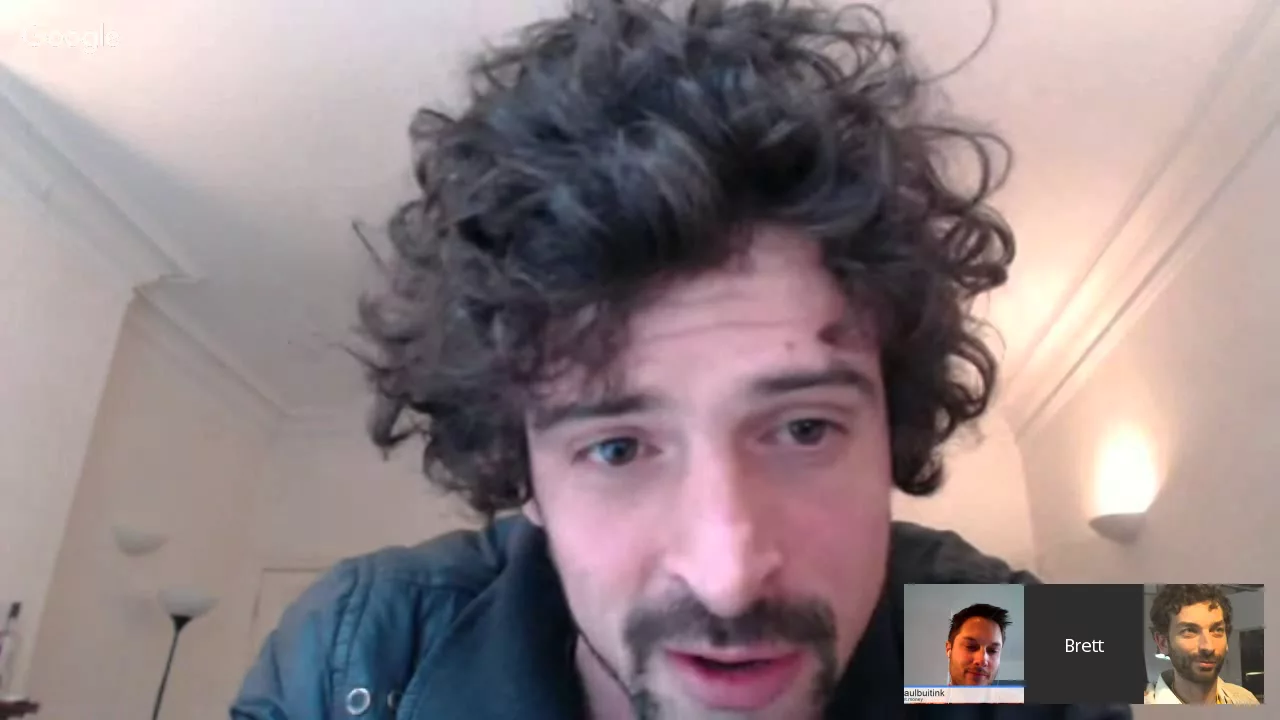
Um, hi everybody. Welcome in a new episode of the reinvent money show. My name is Paul Boutink and with me co-host Avon from Verm. He's a journalist writing for Bitcoin magazine and also Cointelegraph. His camera is not working so we will see his blue avatar. Hi Eron. Hi guys. And our guest today is Brad Scott. He's an activist, anthropologist, writer. He wrote a very interesting book and and also he wrote a lot of articles for Guardian. His book is the heretics guide to global finance hacking the future of money. Um welcome Brett. Hey, how you doing? Good to see you. Let's talk a bit about you first. Can you tell us more about your background and and
how you um how you become a financial activist? That's quite a long story, so I'll try and give a short version of it. Um so I come from South Africa. Um I studied anthropology and history and also international development. So stuff around economic development in countries. Um but mostly background in anthropology and history. Um but then um I went and worked in the financial sector for a couple of years in the world of uh derivatives. Um so swap contracts um uh which we can discuss if you'd like to but um as a broker um so I got some
experience of the world of um high finance and then after that I started working with campaign groups and on sort of mixing together financial stuff with activist campaigns um and I wrote the book sort of I was asked to write the book based on that effectively. And how long have you lived in the how long have you worked in the city for in like in high finance? I worked for I was I was a broker for two years. Um which is not like a massively long time to work as a broker but it was enough to get a a decent sense of what was going on. And then in terms of and that that ended in 2010 so that was 2008 through to 2010 right through the financial crisis. Um and
then since 2010 to now I've been sort of freelance going different projects and writing and um yeah workshops and so on. Interesting. So you started working there already be the crisis um wasn't in full swing when you started working as a broker. So you've you've witnessed the the outbreak of the crisis and all of that. Oh yeah. Well, I mean basically I started working in September 200 or August 2008 or September 2008 which was as Leman Brothers collapsed. So um I started working in the financial sector right in the midst of the crisis uh which was interesting to put it
mildly. Exactly. As a broker because you know brokers basically specialize in trying to match up uh people who are trying to buy and sell in financial markets. Um and in the world of derivatives it's about these huge bets that people are taking on with each other. Um and in the midst of the financial crisis um that whole market imploded and it was a bit haywire. So it was quite like an interesting time to be trying to do that job. Yeah. But they didn't fire you in during that time because I can imagine as a as a junior when you just started working there amidst during the crisis that they might might want to kill you or or um fire you but you were still able to keep on working there. Yeah.
Interesting. It was actually it was actually a startup company um that was venturebacked. So, and part of the idea about what they thought they could do. So, it was a bunch of guys from the big banks who had um drifted off or been thrown out or whatever who decided to start up their own company and they thought that they could actually take advantage of the sort of financial crisis to do a style of brokering between big organizations that um were under stress. So um yeah, but so they were trying to start this right in the midst of this turmoil and it it kind of was it was much harder than they thought it would be and the company went bust I think around
2011 or 2012. I'd left by then, but okay. So, you left the ship be in time, the sinking ship. And and the whole what what I read in your book is that you find it very important. That's kind of the main maybe the key message of your book is that as an activist, it's important to to understand the system you're trying to improve or you're you're fighting against. So, you want to you wanted to be able to understand the DNA and the code of the financial system in order to then to hack it. Could you elaborate a bit more on on that theme which is sort of the the the underlying theme in your book?
Yeah, sure. And that's that's not a particularly profound thing to say. I mean any whether it's the financial sector or um you know the weapons industry or whatever your particular campaign or cause is uh it's obviously helpful to um uh try to get to know that industry. But unfortunately activists because often built into the sort of identity is a kind of rejection of the system that they're trying to fight. So they don't want to often spend time actually hanging out with bankers or going to the conferences or um actually reading stuff that you know the banks produce. So I guess what I was sort of saying is you know if you really if you're really interested in sort of challenging the
financial sector you should probably spend some time with people who work in it or try to go and you know just read the financial times or um you could do what I do which which was you know actually go and work in the financial sector but um you know there's many ways you can do that in a milder form um and I still do that nowadays you know I still try to spend time um in your sort of you know mainstream scenes to sort of get a sense of what's happening and to speak to people and to take them seriously, right? What do you think about the Bitcoin community in that aspect?
Bitcoin community is kind of trying to hack into the world of money, right? Um, how do you feel the Bitcoin community is approaching this subject? Oh, I don't know. You know, I actually, you know, I spend quite a lot of time with the Bitcoin community, but it's also partially that I'm trying to uh I'm trying to hack into into the Bitcoin community itself as well. So, uh, half of my time I spend with the Bitcoin crew is like because I'm interested in Bitcoin, but then half of it is also, uh, trying to work out what's going on politically and what the dynamics of that scene are. So, it's my anthropological hat on to some extent.
Um, but, you know, actually, I don't think I've got a a strong enough answer for you on that. I mean I think the Bitcoin community has quite a few different interest groups involved um who have slightly different ideas and I think what's quite interesting about Bitcoin community is that it's um people are kind of united based on a opposition to the sort of mainstream banking sector but they don't necessarily have commonalities with each other beyond that. Um, so, uh, you know, you get the sort of entrepreneurs and you get like, you know, left-wing anarchists, you get the more sort of right-wing, uh, sort of conservative libertarians, you get, uh, people who are just curious and like
technology, and they're kind of like So, Bitcoin events are quite I find quite fun because they sort of this weird mix of people, but also you sense that it's not entirely um, well coherent necessarily like in terms of uh people have different interests. That answer your question? you know, like there's there's a it's sometimes questionable in some of the financial technology scene how much it's often phrased in terms of disrupting the big banks. But um you know like a lot of people who are involved in financial technology if they were given a choice would accept a buyout from a bank. So uh
you know some people want to disrupt others just want to make money. Do you think this is a problem at all? Diversity? Not necessarily. I don't know. It depends on what your objective is. Um I Well, I don't like hypocrisy. Um so it's only a problem if people are claiming to be doing something else, you know. So I don't mind if somebody wants to make cash by selling their startup to a bank, whatever, you know, but they shouldn't claim it as anything else than that. Right. Right. In one of your articles, you described Bitcoin as a black knight.
Could you elaborate on that? So, that article was called um a dark night is better than no night at all. Is that right? Something like that. Which was I'm trying to remember what my argumentation was. I was I was basically saying I think Bitcoin has has problems as a as a if you if you're looking at it in a silo by itself. Um and you know I mean there's there's uh we could go into those particular problems. I mean but but also if you zoom out and you look at it in the context of uh the entire financial system I'm very glad that it exists because it provides this one sort of counterpower to the normal bank payment system. Um and I find a lot of
the critique of Bitcoin tends to not look at this. a sens focus in and say, "Hey, you know, Bitcoin's full of, you know, I mean, I don't know, it could be like attacks on the people involved. It could be tax on on how safe it is or the, you know, the centralization of the mining. There's a whole bunch of critiques that go like internal to Bitcoin, right? But they're missing the the the main point or they're missing the big picture basically. Yeah. They're not big picture. Well, compared to the existing banking system, it's not actually that bad, you know, like so you should sort of like have to look at it from this more strategic position. And that's what I that's why I support Bitcoin a lot actually is um based on the fact that it's one of the very few um sort of potentially scalable
alternatives to the normal bank system. and and when you and it's not it's not like I think that Bitcoin will take over somehow but I want it to be there as a as an alternative. Yeah. Let's talk a bit about the banking system because in your um latest article on the guard in the Guardian you um made a very a lot of very interesting points. So first of all um you talk about the fact that nowadays you are um almost obliged to have a bank account to participate in in in commerce. um especially in London but also in Amsterdam there are more and more shops that uh only accept cards and and we're slowly but surely moving towards a cashless society. One of the problems there is so is that we are becoming almost completely dependent on
the banking system. Um could you maybe elaborate on that a bit more? Is that a problem and why is it a problem? Um well there's I mean I I suppose it's first worth mentioning that um we're quite far away from this idea of a cashless society, but as you mentioned there are certain countries where it's we're sort of edging towards it and you're right that in Amsterdam it's becoming you know you'll go to shops and they say we don't accept cash.
Um, and also in Sweden, you get that kind of thing as well. And and increasingly in London, you know, there's like, you know, the buses won't take cash anymore. And so there's a slow erosion of the legitimacy of cash. Um, and basically that means that that how you do payments is you have to have a bank card. Um, because the um Yeah. And so so and we can go if you want to talk about the sort of uh technicalities of how that works. I mean basically in order to engage in electronic payment you have to first have an account with a bank um and a way of controlling that account which is you know it could be your internet bank
account it could be your contactless card um and then you basically send messages to that bank and you ask them to um move money around for you. So you don't directly um give money to somebody um like at the count of the shop. You actually ask these banks to do it on your behalf. Um and that basically means that there's always an intermediary to every transaction that you're doing. Um now you might not mind that if you're a person who's I don't know maybe maybe this doesn't make a big difference to you, but if you're somebody on the margins of society that could be very very uh um limiting. So the one of the examples I use for example is imagine
you're actually a refugee who's just arrived in a new country um and no bank wants to give you an account uh because you have no uh permanent abode and you don't have any sort of um credentials. Well that in a in a proper cashless society that would mean you won't be able to engage you won't be able to exchange you won't be able to engage in commerce at all. Um you'll have to go via somebody else. Um so that's uh this idea that you would have to use banks to engage in exchange is problematic for anybody who's just a marginalized figure. Um and then secondly, if there's constantly an intermediary in the payments process, it also means that every every transaction you're engaging
can potentially be watched um either by a commercial entity like a bank or potentially by a government entity if they get certain rights to look at that data. Um so you can have increasing tracking of people's um behavior in society and if you can watch it the sort of the implication that comes that you can start to sense of that. So if you don't like somebody spending money on a particular thing you can start to stop that. So you can say um we will no longer allow you to pay this person that we don't like. Um so for example we've seen that with Wikileaks and companies like and groups like that but you could potentially do it for all sorts of groups. That's that's why the article was called 1984 does a cash economy make for a surveillance state and but it
ended with a question mark was a question. So to answer your own question do you indeed think that um we will usher into an orelian society with when we slowly but surely move towards a cash society? Well the first disclaimer I'd say is I think we're still a long way away from that. Um, and secondly, I don't think people just lie back and accept stuff that doesn't work for them all the time. You know, I think people still, if it became apparent that um, this was a problem, you would find resistance to it. So, I'm not saying there's going to be like, you know, this is some inevitability that um, we'll end up with a a giant financial surveillance state.
Um, but let's put it this way, the powers that be are pushing for it. So, and that includes uh governments and people like central banks, but it also includes uh the commercial sector, the banking sector, a lot of the payments companies. Um they make a lot of cash off this, you know, Mastercard, they all they're all pushing. So, if you go if you're in London, you see that there's this alliance between the mayor of London and Mastercard. um they they're running all these campaigns using big sort of celebrity figures to push push this uh cashless contactless payment on the London underground. Um so they're in these like
alliances to make it happen. Um and yeah I worry about the implications of that. So in terms of like what what the actual surveillance society would be, I mean on the one hand you have these overt abuses like okay we can track what you're doing but potentially a much more important element is this idea of a panopticon um which some people might have heard of which is if you feel that you're being watched you start to um censor your own behavior. So the ideal system of power doesn't actually necessarily require police to be out there like beating people over the head. What your ideal system of power has is when people
police themselves um and start to change their own behavior based on the perception that they're being watched. Um and that's what happens if you start to perceive that every transaction you're you're engaged in is being watched. You start to change the way you behave. And that's the kind of a much more subtle form of control than some kind of authoritarian state coming and like knocking on your door. So I would I would like to throw in some standard arguments against this to see what to see what you say. So the first argument would be if I have nothing to hide it's not a problem, right?
Yeah. Okay. So um well you know this this argument's um very pervasive and um the only sort of uh the quite powerful way to illustrate what's wrong with it is to say so let's say I'm sitting in this room right now um and imagine a guy knocked on my door um from let's say I mean either from the government or from a big company um like Facebook for example like a massive and said hey Brett we're just going to install the surveillance camera in your lounge. Um, it's going to it's got facial recognition. It's going to track you and your housemates and it's we're going to basically build a database of everything you're doing in your house while you're doing it. Um, and then I
say, um, actually that makes me feel uncomfortable. Why are you doing it? And they say, well, if you've got nothing to hide, like, uh, why should you mind? Um, and that's basically the argument that they're making, right? It's like, if you don't want to be watched, it must mean you're hiding something. and which is clearly crap because people value privacy for many reasons other than they're trying to hide. People value privacy because it's it's it's important for your mental well-being to feel like you have times when you're just yourself and alone and not being watched by somebody. Um and anybody knows this when they like you know you know s you at a conference and you you're you're a bit stressed out and you go to the toilet and you're in the toilet cubicle and suddenly you feel like a little bit more you have a little moment to relax. you
know, it's like you're just by yourself and then you can go out and you can face the world again. People need that sense of space in order to be able to actually operate in a society. Um, and this whole this whole argument that if you don't want that space, you're somehow hiding something is clearly All right. Um, Bitcoin in particular is used for mainly probably or at least a lot on the Silk Road and these sorts of dark net websites. Um, shouldn't isn't it a good thing is Bitcoin is tracked so we can stop this sort of thing.
Bitcoin is tracked. Well, anonymous money is mostly used for illegal purposes. At least Bitcoin is at least for a very large part. So, is that not a problem? Is it not a problem that needs fixing? Again, if you're looking at it, looking at that in a silo with no context, that argument sort of holds weight um depending on how sort of moralistic you are. Um but if you zoom out again and put it into the context of of uh of the broader society, it doesn't I mean so the first point is that um we already have um large parts of illegal transactions go on with cash. All right? And again,
this is the trade-off that you're making when you wanting between anonymity, which is very important for social well-being, and the fact that you have um informal systems that develop when you have a what's what's the word like um marginalized activities that occur when you have anonymity. So, if you're looking at at what u secrecy tends to be used for, it's either for, you know, you just want privacy for yourself, your personal well-being, or you want to because you're engaging in some kind of activity that's frowned upon by the mainstream. And that that can be crime, okay? But it can also be, for example, political activity to try and change the way a system is run. And historically that's been a very very important pusher of progress in society
is giving people space to um engage in activities that are seen to be marginal. Now as soon as you eliminate all the abilities to do that for example if you have a massive push against crime and you stop all the outlets for potential to engage in crime you also happen to simultaneously stop all the outlets for any kind of creativity and flexibility in society. Now when you got to you got to make a decision which of those do you want to prioritize? Do you want a hyperefficient society where everything is perfect or do you want a society that has creativity and flexibility in it?
All right. And that's that's the kind of the way you should phrase this question. It's not like you know do we want crime or not want crime. Um I don't that makes sense. Yeah. And another question here then Brett. Do you think the central bank or the government should start issuing digital anonymous currency? So state sanctioned digital cash, I know Bank of England is uh is talking about these things and also in other countries there are some discussions. Do you think they should do it and do you think they will ever do it? Because because it seems kind of counterintuitive to them promoting um transparency and and and and just bank payments.
Yeah. You know, I've never really understood this argument for why uh central banks would start issuing, you know, anonymous cryptocurrency. I mean, it I don't I don't see how any it makes sense from I mean, the whole point of a central bank is to collect as much as big data to collect as much data as possible. Yeah. And look, and I'm not I'm not like um uh necessarily always against central banks. I mean look these are institutions that have developed in society for various reasons. Obviously they had lots of problems around the power dynamics of how they're controlled but I mean look they're designed for a particular purpose historically in society which is try and maintain the stability of the banking system and that involves control right so you have to
control things that's part of the whole point why you have institutions um and then the question is how much control do they have who gets to have a say in the in what's happening etc etc and democratic systems are supposed to be able to control that kind of thing but there I don't see why a institution that's charged with control would um start to have uh pushed electronic currencies that they can't control. I mean that's in a way they they have to control money supply and and price stability for example and they used to and they have been issuing um normal cash money for for all these centuries.
So in a way it's just modernizing their their issuance of of cash money. Yeah, possibly. So I mean uh if you look at the existing system of money, you have effectively two forms of money that exist. You have uh the actual cash in society which is the only form of government money that we can actually hold. Um and then you have um commercial bank money which is uh partially backed by a a sort of a central bank e- money um which the banks themselves have access to but we don't have access to um and so there's two questions in this is like when you're
talking about central banks um issuing their own cryptocurrency are they saying that you will be able to have uh directly hold um the commercial bank or this the central bank e money that commercial banks can right now hold or are they saying we're just going to this is going to be like a different type of money like a for just a replacement for cash that's different to what the commercial banks are doing question it's like positive money in the UK is trying to achieve just the first thing you mentioned right in a way and in Holland you have a same movement as well where they want citizens to be able to have 100% money at the central bank or some other institution.
Yeah. I mean, so the basic idea would be right now commercial banks can have an account at the central bank, you know, much like we have an account at the commercial bank, but so they can have an account at the central bank and would the the central bank allow citizens to have accounts with it as well? Now that's like it kind of defeats a lot of the purpose of you know the whole sort of historical alliance between central banks commercial banks is like look central bank will maintain the sort of stability and stuff and then we'll let commercial banks go and do the actual um most of the money issuance without backing um because we don't have to deal with that and uh so the idea of
the central bank somehow opening up its accounts to all sorts of citizens is a bit strange And I I don't haven't researched it enough. And I think there's been historically attempts to maybe do it, but I don't really know. It doesn't make sense to me right now. Well, in Ecuador, they're doing it actually. Uh the central the citizens of Ecuador and can open an account with the central bank directly. I mean, with technology, it's very easy. Of course, if you can if you can open account with a central bank, why would you go to a a riskier commercial bank? You know, that's another that's another point. Do do you think there needs to be a split between um um like commercial banks that loan out that create money and and loan out the basically have a fraction reserve or um that we should have a
split where you could also have commercial banks that act as full deposiitories where you can um store your money that's not being loaned out. So you get full reserve banks on the one hand and fractional reserves bank reserve banks on the other hand. Uh do you think that might be a good model? Sure. I'm not sure. I mean, have you spoken to Ben Dyson and the guys from and Fran from Positive Money? Yeah, but they want the government to take care of that, right? You could also have the in a commercial marketplace where some people store yours, some banks store euros with 100% reserve and some other banks have a fractional reserve. Okay.
You can then remove deposit insurance and and maybe also even other guarantees guarantees and banks will kind of balance themselves out. So what you're basically saying is that I as a person could go to I could make a choice between I want my account effectively to be like a a vault account type thing where I basically deposit money if nothing happens to it but or I could choose another one where I get some kind of interest which is a fractional reserve bank. Exactly. Uh yeah I mean I don't know maybe I haven't looked at the feasibility of that. Um it would be interesting. But I mean bear in mind that um I wouldn't call a full reserve bank a bank at all. I mean the art of banking historically has been
um it's a it's a I mean banking as we know it is fractional reserve banking. So a bank that just takes money and then just sort of like sits on it isn't really a bank. It's kind of like a like a storage house or something. I don't know what it is. It's not a bank though. Um, it's kind of like a [Music] fund. Um, but yeah, I don't know. But it's look look the the the politics of fractional reserve banking is a massive topic and I I kind of think um uh I I quite I quite enjoy sometimes with the new economics foundation in the UK some of their takes on it because um they tend to be um well not only them but like looking more at the sort of
uh that fractional reserve banking by itself isn't necessarily a problem provided you have um proper democratic governance. on the process. Um, and that's like depends on how much you believe in the democratic system. So, if you believe that people um well, do you do you believe that the decisions around the money supply should be in the hands of a democratic decision-making process or do you believe it should be in the hands of technocratic um sort of quasi I mean maybe government um agents or do you believe it should be in the hands of profit-making corporations? Now, these are all kind of
have like different tradeoffs to them depending on the on on the country. Um, I don't necessarily think that any of them are perfect. Um, and when you're trying to design a monetary system, you really got to think about how do you balance those interests. So, like banks when they're making loans, look, they're not just recklessly making loans for the for the for like short-term profit. They actually have to think about is it stable. I mean, they're not completely reckless. Um but of course they they have systematic biases towards lending towards certain things like housing and like other financial institutions. They don't really give a about like a lot of things that are important in the long term. Um similarly like government politicians who or let's say let's look let's think about central bank if you think it's like a government but like um
they have particular priorities which which are different to the the banks which aren't neositive either. Um and maybe like if you had a under purely democratic control around money money issuance you would end up with weird anomalies as well. So I mean this is a bit of a roundabout answer to saying you know controlling the money supply is a complex issue and you kind of want to balance of powers effectively rather than concentrational powers. Right. Yeah. There's there's no easy answer. There's no easy answer. What do you what do you think of some of these UK initiatives initiatives? I hear myself twice. I hear myself twice. Iron is there. I don't think it's here. Um Okay. What's Ghana? Um what do you think
of the Brixton pounds and and Bristol pounds? Some of these complimentary currencies that we see in UK are they gaining any traction there? Because I read a lot read a lot about them, but it's very difficult to me as a as an outsider to understand whether they make a dent or whether they can actually come become something big. Okay. Um so um so these are like like local currencies and which are quite different to to cryptocurrency. I mean cryptocurrency the whole the whole point of it is to go super national. So global effectively you know you can have a global currency. Um and then you the local currencies have on the other end of the spectrum they they say let's go not super national let's go like like
really local. Um and uh interestingly cryptocurrency community and local currency community are sort of united in the fact that they both challenge the normal state money system but they're different in the in their sort of um you know some of the other other ideologies. A lot of the the local currency communities are often about building smallcale collaboration localist economics. Um and so and the bricks and pound is an example of this. you know, it's a a currency that operates just in one neighborhood in London. Um, I've historically used it quite a lot because I used to actually live in Brixton. Um, and I know the team pretty well. Um, and basically it's just it's it's a pretty
simple system. It's like it's effectively it's regulated as a voucher system. Um, they you take they take your money and then they issue with you with a Brixton pound for it, which is technically the government considers that a voucher. Um and then that bricks and pound you can then spend um at local businesses who will accept it. Now one of the first critiques that sort of people from a standard economics type thinking come from as they say ah this is really tiny it's small doesn't really do anything um doesn't really have that much effect but part of the real point of these localist initiatives is to create a symbol of a local economy. So all small businesses in Brixton um who
want to show that they support the local Brixton economy will accept it. I mean even if they only get like let's say 5% of their transactions or even like 1% of their transactions the business that they do comes in bricks and pounds it's still a very important um kind of identity marker for them to say hey we are are trying to do this. Um and it's also quite important for say like local counselors and stuff who want to show that they support the local economy. They they start to support the bricks and pound. So um I'd say bricks and pounds has been comparatively successful. Um and the brick the Bristol pound has has been based off the same idea. Um and they sort of they sort of jacked up the their game by um starting to do mobile mobile payment. So you can
go and I can pay with my phone um the bricks and pound. I actually can show you the app if you want, but um and it's pretty cool. You know, I've I've been in Brixton when I've run out of normal cash and I can suddenly pay with my um my bricks and pound app. Um I don't know if I can show it to you right now, but it's it's this I don't know if you can see that. Yeah. Yeah. Got David on it. So they they act as a sandbox where a lot of innovation can take place and they they trailblaze maybe how we can use money and then it can be possibly adopted by mainstream players as well. Yeah. Yeah. Um but you know like I would say some of the most interesting systems that I know in local currencies are actually the mutual
credit systems. I don't know how much you come across these, but like I got a mate in Sardinia um called Jeppi Lera who runs a really cool one called Sardex. Um and his his basic um and Sardinia is an island so you know it actually has quite a a semi-coherent economy that you can kind of map out. Um and he went back there after being you know abroad and he realized that a lot of the big banks um big Italian banks were ignored these small businesses in Sardinia and they struggle to get access to credit. Um and then so he she decided to try and start this system where he gets them to give credit to each other.
And this is like a mutual credit system. So they can um uh the mechanics are are a little more complicated than that, but basically it's a way to create almost like a collective uh short-term community bank system. So um if you have um you want to get something but you don't currently have money, you can actually go onto the system and get it on credit and then later um you give you give back to the community. Um and then so he's developed this quite interesting um network of small businesses who all do business with each other now based on the system. Um and on the one hand it helps them get new business but on the other hand it also actually develops this sense of solidarity between them.
So they all start to perceive themselves as being part of the same economy and they start to actually want to help each other which is a good thing. Yeah. And it gives them the sense of autonomy and independence of the global financial system. I guess it sort of feels like they're and some of these uh some of these alternative systems are counteryclical in the sense that when normal bank lending or credit starts to dry up these things become more important. So if you're thinking about designing a resilient system that's resistant to crisis you kind of want um this mix of different players. Um, of course you know that whether that works depends on the strength of the different players. I mean let's say suddenly the banking sector starts booming and then people stop using Sardex. I mean Jeppe might struggle for a little while but
then suddenly when the you know the banking sector uh goes down he starts to bounce back. So there's this kind of like uh you know if you if if your if your alternatives are robust enough they can last a long time. Yeah. and they can be very useful in society. Very interesting. Sardex, it's it's called, right? Yeah. But there's other there's other, you know, examples of these systems, but Sardex is one of the most interesting that I've seen for a while. Well, that's maybe one for our viewers to look up. Um, so well, thanks so much, uh, Brad. Um one other uh important lesson I think from your book is that there is this um sort of deficit amongst people about finance about understanding how the financial world works. Um so
it's a matter of also trying to reduce this deficit and for people to understand how it works or maybe to participate even like you work work for a while in the financial industry and and work from there um towards solutions. Is there any other um what are the other what's the other main lesson that you want to um give away to our viewers? Um well I mean uh I'd say the best thing to do for if you want to start to explore alternatives to the to the you know the doineering banking system is to start just playing with the alternatives you know and this is what I like about Bitcoin you know look I'm not I'm not like an evangelist for every aspect of Bitcoin but I like the fact that it's
different and it's new and you can you can mess around with it. I was actually I was in um uh Bulgaria in Sophia a couple weeks ago and I was in a coffee shop there and suddenly I saw I could they accepted Bitcoin and I was I had I was my wallet my my bread wallet on the phone and I I paid for three three items with it and I was like this is so cool you know like it's just fun right um and uh you know so the best thing to do if you want to learn about stuff is just to try out these platforms and not only Bitcoin try out some of the you know uh sharing economy platforms um you know non-monetary platforms try out the local currencies or the peer-to-peer systems.
And then, you know, you don't have to actually like them. You can think that they're crap, but like that's an important um lesson to to learn and to to be open to those um and to sort of see what you like about them, what you don't like about them. Yeah. So, if you get that intuitive knowledge, you know, it's much better than reading a book about something. So, yeah, I'd say where can people buy your book or get your book? Um uh various me you can get it on Amazon actually you can get it on my publishers website which is Pluto Press um so it's the heretics's guide to global finance hacking the future of money um alternatively as mentioned there is a pirated copy floating around as a PDF um so if you don't mind reading
PDF documents which isn't always entirely pleasant you can get a you can get it free but the the the key thing though if you take the if you if you take a pirated copy it's an obligation to to send it to as many people as you as possible um as well. Yeah. Yeah. So that's why I mentioned it destroy your business but and yeah, you know, actually I think the problem about about normal book book uh distribution is it it doesn't go to lots of countries, you know, so you distribute in Europe and stuff, but then you know, countries and I had a guy from from Lebanon getting a hold of me being like, "Hey, how can I get a hold of your book?" And I was like, "Shit, you can you can order it from, you know, like a German site and he's going to they're
going to charge you like 30, you know, euros of postage and stuff." So, actually, I'm glad that this PDF's floating around because it means people in countries that don't have access to those systems can can get it. Right. Well, thanks. Um, Erin, maybe you got a final question from Brad. I'm I'm all done. Good. And if you I'm I'm S Pum on Twitter, which is S U T P O SUM. Yeah. And you will be in Amsterdam in December, right? The 3rd and the 4th of um of December for a conference. Yeah, I'll actually be in Amsterdam from the 1st of December. I'm I'll be talking at Bitcoin Wednesday, I think, on the 2nd. Um, and then I'll be at Money Lab after that. Oh, nice. Yeah, we should
definitely meet up um either on Bitcoin Wednesday or the Money Lab conference. Sweet. Great. Thanks so much, Brett. And um and good luck with all the things you're doing. Cool. Thanks, guys. See you. Bye. Cheers.