Dollarization, currency boards and central banking
De Week van Bitcoin · 9 Aug 2016 · 44:37
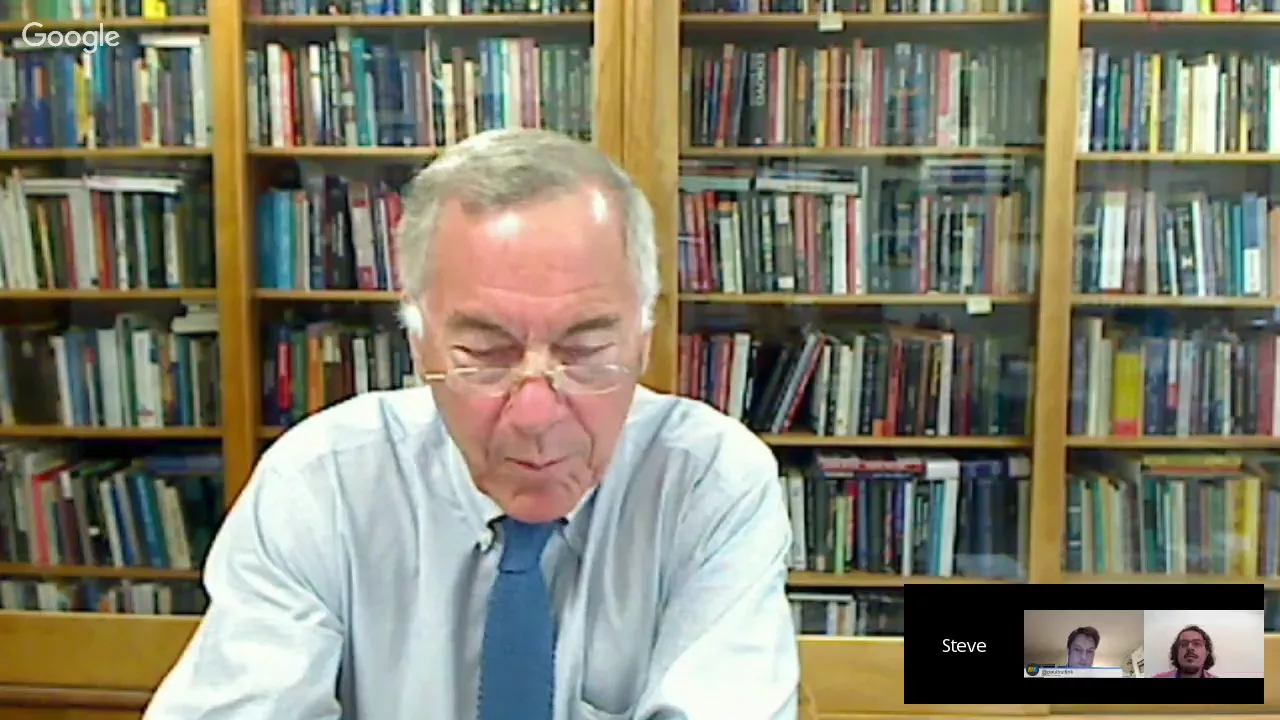
Economist Steve Hanke of Johns Hopkins University and the Cato Institute talks with Paul Buitink and Quito-based professor Luis Espinosa Goded about the case for dollarization and currency boards. Hanke recounts advising countries from Argentina and Estonia to Bulgaria, Montenegro and Ecuador, and argues that central banks tend to produce high and variable inflation while a foreign currency or currency board brings discipline. They discuss how banks cope without a lender of last resort, using Panama as an example, and Ecuador's small financial sector.
Speakers
Topics
From De Week van Bitcoin; community: Reinvent Money.
Transcript
[Music] good day everyone my name is Paul wtin and welcome to a very special edition of our monetary talk show my co-host is Spanish Luis Espinosa goet he's calling in from Kito hi Luis hi PA and uh where Luis teaches as a professor at the University at San Francisco he's a big proponent of keeping the US dollar as money in Ecuador and together with Luise I'd like to extend a big Welcome to our guest today it's Professor Steve hanky Economist at Johns Hopkin University director of the troubled currencies project at Koo Institute and a decades long currency reformer that Professor welcome in the show Good To Be With You Paul and and of course with Louise
too yeah you guys have met in in Ecuador a few times right Luis could you tell us a bit more about um what your connection is yeah we are very thankful to Professor Hani we also give Anor SCA in my University because he's one of the few people outside eador for the dollarization in the year there were so many people he could site some of them also in the international monetary fund that were against the dollarization and we are very thankful because Steve play a good role defending realization in those difficult years okay great well um Professor maybe it's good for the
audience for the part of the audience that um haven't heard of you before could you share with us um some of your highlights as in all those decades as a currency reformer well I I'd be happy to do that Paul I think be before I mention anything the the reason that I I became very interested in in currency reform is that if if you look at the the world and you H have the world out there with all these central banks producing domestic currency you have to ask well are these monetary arrangements with central banks wise because typically they produce one thing that's very bad
inflation they have high Produce High and variable inflation rates so that's bad and and and associated with the high and variable inflation rates you you have highly variable and and relatively low rates of inflation when you compare Central Banking countries to comparable countries that have other monetary Arrangements like dollarization you using some foreign currency or or like a currency board system that that that is essentially cloning a anchor currency with a uh a domestic currency so so if you if you look at what's good and what's bad m
conclusion was Central Banking was bad it was producing a lot of inflation and slow growth and that these other arrangements either cloning an anchor currency with a currency board or adopting fully a foreign currency like like the US dollar or Euro the the or the Swiss frank in the case of lonstein of course they use the Swiss frank so so that's how I got into the the the the game shall we say and and the game really started in Earnest in 1989 in Argentina uh I was working with a group in the in the Congress there uh and and
I did this after meeting in 1989 the first time with president minam and I worked with this so-called Al sagari faction within the Congress and came up with a a proposal uh Dr Kurt Schuler and I co authored a a book in Spanish that proposed an orthodox currency board for Argentina well in April of 1991 actually Argentina adopted something similar to but not really the real thing and that is something they call convertibility and the problem with convertibility they put this in an April of April 1 actually of
1991 and the the problem with the convertibility law there were a lot of loopholes in the law a lot of things that really allowed for the central bank to engage in discretionary monetary policy and in September or maybe August of 1991 I wrote a a piece in the Wall Street Journal saying that eventually the thing would blow up because the central bank would engage in discretionary monetary policy well it lasted 10 years the best 10 years performance they've had in in contemporary history in Argentina with convertibility but it did blow up and it was abandoned in 2002 along the way I I
was 1989 really through 1999 advising president manam uh informally formally invi advising uh the Minister of Finance Domingo cavalo in 1995 and so that was first experience quickly going through other ones uh in 1992 Estonia had the Russian Ruble and the Russian Ruble was inflating Estonia was independent then they they they weren't part of the Soviet Union but they their currency was the ruble and it was inflating they were desperate to get rid of that and I wrote a book with uh Professor LS ying and Dr Schuler in
which we proposed an orthodox currency board I went there in May of 1992 and proposed this to the uh government and they installed in June of 1992 a currency board it worked like a charm right so for decades you've been advising all sorts of governments yeah we could then it was Lithuania currency board in 1994 BOS Bosnia Herzegovina in 1997 both Bulgaria was a famous case where we put in a currency board in in July of 1997 and and they had really a hyperinflation in Bulgaria the monthly
inflation rate in February of 1997 was 142% so that we in July when we put in the currency board inflation stopped immediately and within 30 days interest rates were down in single digits and uh as they say the rest is history so so that that's the that's the experience we all all these cases did what they stopped inflation with a currency board and stimulated economic growth now the dollarization comes in a little later the first dollarization I actually did I was part of the government in Montenegro
in 1999 and we adopted the Deutsch Mark Montenegro was still part of the rump Yugoslavia then but they they got rid of the Yugoslav dinar and replaced it with a Deutsch mark it it worked perfectly and then we had 2000 uh in Ecuador Ecuador got rid of the sucra and replaced it with the US dollar inflation of course fell right away and economic growth and and performance has been very good in Ecuador even though the current government has has a very very much the Chavez type of economic socialist model so so dollar the dollar the key thing
with dollarization it it provides discipline now now the president in Ecuador Korea is always complaining about the straight so-called straight jacket you see the dollarization puts on him every day he's complaining and AR arguing that this is this is terrible but if you have a government or governments and weak institutions like they have in Ecuador you you want to put a straight jacket on those in government that are responsible because if you don't have a straight jacket you're going to have unstable money a lot of inflation and slow economic growth so a straight jacket is exactly what you want
yeah like a go standard in way like like a modern gold standard for foror in this case yes and and and the only difference is the convertibility of the and if you have a currency board the convertibility is back into the US dollar in the case of equid workers there isn't any convertibility they're using the dollar outright so that's their money but what about um for if if a if a bank in Ecuador extends credit he creates um a loan he also creates a deposit but that is not a real daughter then it's like a claim to a to a daughter when when people go to the ATM and they get money from their Bank they're converting a dollar claim into a
dollar basically or what's what's going the unit no the unit of the unit of account in in terms of the loans if the unit of account and the loans are made in dollars which they are in Ecuador that that that's not a problem you're you're creating broad money bank money but but the high powerered money the the state money is is not produced by the central bank and Ecuador it's it's produced by the the the Federal Reserve and of course the the the determination of how much high-powered money is in Ecuador is a function of the balance of payments I mean that but but what you were talking about Paul is is very important because the bank money in fact is the most important part of the money
supply in in in terms of the absolute amount broad money is is produced by Banks in other words M1 M2 M3 M4 what whatever the M number the the thing that's produced by central banks is M Subzero high powered money and and and the high powered money in in Ecuador is the US dollar and the magnitude of the high part money circulating is a function of the balance of payments in Ecuador so in a dollarized economy like uh like Ecuador When A banks when a bank gets into trouble um what kind of facilities can a bank use then because in any other Sovereign currency issuing country the
the Commercial Bank can get a loan or can get reserves from the Central Bank how does it work the best example is Panama now Panama's been dollarized for over a century and and their banking system is very integrated into the international uh banking system and international Capital markets so to answer your question the they they never have a liquidity problem because because Panama is like a little tiny pool in the international Capital Market compared to the huge ocean of of capital and liquidity and credit that are that are outstanding in US dollars so if if a if if if banks have a liquidity problem not
not a solvency problem if they have a liquidity problem this is not an issue in Panama Panama does does not need a lender of Last Resort because they just use the wholesale International markets to get liquidity the interest if they need liquidity in Panama the interest rate in Panama on a risk adjusted basis will go up and and it just sucks liquidity into Panama then so they they don't need a they don't need a central bank the problem with Ecuador e Ecuador has a problem because their their banking system is not integrated well with the International System and this is Louise can talk about this I can see
he's anxious and raring to go but but the the the the system of Banks and Bank regulation and Bank integration is UN underdeveloped very underdeveloped in Ecuador and this is a problem and the laws are a problem in Ecuador it it is not like Panama where Panama does Need A lender of Last Resort they're using the Capital Market it's a free market the it's it's potentially a problem in in in Ecuador may add that I thought we thought in the year 2000 that with dollarization the economy will be more open to the world it didn't happen but the dollaro had working as a proxy or
almost a free banking system without a central bank being a last resource and it worked so well the equadorian financial system is swn and used to be swn before Korea M it used to be sound and it's because the bankers had done their work very well because they didn't know that there is no moral hazard they didn't they they did know that there was not a last resource lender right yeah that's that's so do you agree with that Professor that it's kind of U there is of a free banking environment now in in Ecuador because of the lack of a lender of loss Resort um I wouldn't I I think that's a
stretch uh to characterize it that way I I the the fact is that the financial sector in Ecuador is Tiny it's only that that includes Banks insurance companies brokerages and so forth it only accounts for about 2.9% of GDP so the financial sector is is very should we say underdeveloped and and and and somewhat backward in in e in Ecuador there's a lot of potential there simply because like Panama it is dollarized but the the Ecuadorian laws have not encouraged shall we say a more robust development of the financial
sector but it it would be easy to do because it because the country is dollarized right yeah in 2003 you wrote a paper Professor about um the necessity of having rule of law um in order to to become a sovereign currency issue so if you don't have the rule of law then um the people shouldn't trust it their own government with the issuance of currency so when when would Ecuador be ready in your view to have a sovereign currency again oh I I I I think it is as as far as the I could see they should be using the US dollar V virtually all Emerging Market country should be using the US
dollar or may maybe the Euro but the the dollar is the king it's it's involved as a vehicle currency and 90% of all the trade transactions it's it's about 65% of all foreign reserves it's it's it's used even the US currency about two-thirds of all of the US dollar paper money the notes that are outstanding are are circulating overseas but is it healthy is it healthy for the world economy as a whole um to have so much uh dominance in one currency to give to to grant that kind of power to the states it it well it isn't granting any power to anybody people freely choose to use it yeah people choose to use another in
other words the these are a little bit theoretical arguments the the the the reveal preference in the World Market is people prefer the dollar for for the over 2,000 years there's always been one dominant currency in the world and it happens that it's the dollar right now and so any any any country that can't keep inflation under control and can't sustain economic growth is is foolish not to to have legal tender status for the US dollar and go ahead yeah may we address this
issue of sovereignity because it's this 19th century concept of the sovereignity of the nation and we should have our own money and what that really means in the year 21st century and what this idea of national cenes can you address it I I see I think is so old and and and the way things work it it it's it's odd because for example if you if you look at trade you look at trade between Britain and Germany and and and the British have the pound sterling and the and the Germans have the Euro now but but almost 40% of
of all the exports that that go out of Britain to Germany are are invoiced and priced in dollars not not Sterling and euros and that's they're free to do that so so what how can you how can you complain about it I I the the dollar might not be a perfect currency but it but it is it it is the dominant and and most important currency in the world by far all the other currencies are are very very minor players the the euro is is a big Regional currency but it's a it's a relatively small thing the Japanese yen is is a is hardly a regional currency it's just a
big National currency the Chinese are are trying to make a move and and the Chinese might be successful because the the US you you you have to ask the question well what what could knock the dollar off the top of the Mone M and and the us could do that in one of two ways either either we could have bad monetary policy and and and then we'd have Challengers threatening the dollar and and and taking over dollar space this is what happened to the pound sterling after the first world war pound sterling was the was the dominant it was the top of the mountain well the US was able to challenge it because monetary policy
became a mess in the United Kingdom and and and Sterling got knocked off the top what do you think of current current US policy then if you look at the current monetary policy of the FED do you think it sound or not well it it it's it's a second it's a second best policy if you're alluding to quantitative easing that what happened and this is why I say it's it's the second best policy but it's it's fine and uh here's what happened after Leman collapsed in 2008 we had a situation where all the politicians in Washington DC as as well
as internationally wanted to regulate Banks more regulate Banks beat up on banks we passed something called The Dodd Frank legislation which is a huge piece of legislation regulating Banks and all of this put a put a crimp it it basically imposed very tight monetary policy on banks that at that time were producing about 90% of broad money in the United States 90% was bank money produced by Banks and so all these regulations and laws and changes that were made after Leman were in effect imposing tight very tight monetary
policy on the United States and in fact even today the bank money level in the United States is slightly less than it was in 2008 when Leman went down so the question is what's the Central Bank do the central bank they have no choice to keep the broad money growing they they have to engage in quantitative easing other otherwise the US economy would have gone into Great Recession imploded yeah it would have totally imploded and and now this is where people get confused many people said well ative easing and the huge expansion of the balance sheet of the Central Bank of the Federal Reserve will cause
hyperinflation they said a lot of inflation well this is just incorrect analysis because inflation is caused by what by rapid growth in Broad money I prefer the the divisia measure M4 which is provided to with the by the center for financial stability in New York that number and and this this measure this metric for the money supply hasn't been growing very fast until very recently but throughout all of the post Leman period when quantitative easing
was underway divisia M4 was growing at less than 3% per year so there's no way you're going to have hyperinflation or or much inflation at all yeah and and that's where people were were got everything wrong all all the gold bugs and so forth completely have the incorrect analysis of quantitative easing they they don't understand money in banking and and how the system works and but but if you like a straight jacket wouldn't you then uh prefer having the gold standard instead of dollarization in for example Ecuador so they they because now you're still depending on good monetary policy in the states so if the states for some reason
screw up their monetary policy then a country like Ecuador would benef would suffer from the consequence I I I I think this is going to take us off into a long session you you'll be up all night in Amsterdam you'll fall asleep by the time we get done with the thing I mean we we we alternative alternative currency regimes then and we start talking about the goal standard and then and then we start talking about well what goal standard because there are many kinds of goal standards okay maybe maybe next episode maybe next episode yeah then and then we could also talk about about competitive currency regimes and then and then we could also
talk about Free banking I think the best thing to do Paul is is is in a realistic way talk about what what's what's on the plate right now and what are we looking at in the world right now yeah and particularly I don't particularly want to talk about the gold standard because the because the gold bugs the people who who talk about the gold standard don't even understand the current system we have right now they've been predicting hyperinflation which is absolutely ridiculous the the broad money would have to be growing at very rapid rates to have hyperinflation and and and Broad money has been growing since Leman until the
last two or three months broad money has been growing at less than 3% per anom meaning that that the nominal GDP in the United States could not grow much more than 3% in nominal terms which is com composed of both real growth and and and inflation and of course that what what this means is we're seeing very low inflation in the United States and also pretty low real growth in the United States mainly because broad money is not growing very fast and it's not growing very fast because the elephant in the room is bank money and bank money is actually contracted a little bit since
Leman and 2008 and and the only reason broad money is growing at all is that we've had this massive quantitative easing by the Federal Reserve so as a result the proportion of broad money made up of State money that's the Federal Reserve money has gone from a little under 10% of total M4 to to about 20% of M4 so right it's made up quite a bit of difference but not much well let's let's go back to Ecuador maybe Louise um you are very much in favor of keeping uh the dollar and you've actually started initiative with other local economists to to start a public debate about it and to show support for
the dollar kit you elaborate on that a little on that a little bit yeah we are very thankful because Steve Han also joined us in this for in Spanish and we are explaining to the ecuadorians what dollarization really means especially to economists and I would like to because the current president Korea is against the dollarization he has said it once and again and he's doing so many things in order to revert somehow the dollarization and some Economist we are here to stand by the dollarization but I would like to ask Steve about this because for me it's quite astonishing that we have this evidence 20 years now in some countries 15 in Ecuador and
really Mo countries with a strong money especially poor countries with a strong money or a s money are working much better than other countries with a not so money and we are still having the same debate we had 20 years ago how do you feel about that do you feel that the economy profession had changed somehow and do they accept the legation any better than they used to well I I think a couple of points one one thing that that Paul Louis and and his colleagues in Ecuador have been doing a very good of of informing the public about dollarization and the public is not is not as stupid as the
politicians think because for example president kareah was just on TV yesterday complaining about this straight jacket of dollarization but but at the bottom of the report at the bottom of the report and and this was coming from the leftwing state television at the bottom of the report it says but the president doesn't like the straight jacket but 85% of the public loves a straight jacket you see now that that's that's because the the the information and educational campaign that that Louise and his colleagues have done in Ecuador
so the president doesn't like it but he's never going to politically get rid of it because if you have 85% of the population saying they don't want to get rid of something any politician who would get rid of something that popular it would be suicide mission yeah I lived in Ecuador for two years that's where I met Louise and everyone I talked to was always very much in favor of keeping the dollar but Louise where where does President think he he will find the support is it maybe the indigenous communities or is it where amongst his amongst his supporters where can he find support for um interesting the the poor people they are really in favor ofation
because it's the first time in their lives that they can have savings and they are so thankful for dollar because they can save their their money is the educated people that read this economic books that they say that Dev valuation is good for export and so on is the educated people but bad educated B economics who are against dollarization for example the president Korea and I very surprised about that the people that feel it that live it they are in favor the people that studies it they are against yeah and what about the people in the North close to Colombia there the companies uh um they seem to suffer a bit from or at least they say they
suffer a bit from um the the fact that Ecuador is much more expensive now compared to Colombia and that devaluated a currency over time yeah but it happens in every country in the world in the borders there are people benefici casing against these kind of things and in this case in the border of Colombia nowadays they are suffering but for 15 years the Colombians used to come to Ecuador to buy things much cheaper in Ecuador with the dollar that used to be in Colombia without the dollar it happened for 15 years so now they are complaining but they are not very much in ration okay I see the professor has is is on mute maybe he's um he's does have
to do something else briefly maybe Lou before um we can possibly talk a little bit about Bitcoin now before we talk about the new digital currency issued by uh the central bank because I look forward to what Professor has to say about that but if we talk about Bitcoin is Bitcoin um popular in Ecuador or how is the adoption going that that is that is really interesting because if you say see the countries in Latin American who are most in favor of Bitcoin are without any do Argentina and Venezuela because their currency are so bad but in Ecuador it's growing uh Bitcoin movement and it's growing because we are very scary about this new currency if I might explain to
our listeners this new currency is the only Central Bank in the world that is creating their own electronic currency why because he one of the few central banks in the world that they don't have their own currency okay yeah um the professor is back can you hear us Professor um you're on mute still or we don't we can't hear you I see your lips moving but um yeah so continue explaining Louise maybe what what this new currency so it's the the Central Bank in Ecuador issues his own currency this is quite quite interesting when we say that President
Korea is timeing to to to to move against dollarization what they are creating is a new currency which is parallel to the dollar but it's an electronic currency managed by the central bank and that is the problem because they are creating the currency that is managed by their Central Bank so it could became a real currency and it could become a real National currency even if it is electronic and how is it created how does the process work it is created it is created just by the central bank they they they are looking to the Kenya or Paraguay models of electronic currency but instead of doing it just of a payment system they are
doing as an electronic currency and that's the huge difference and I think it's quite interesting because Ecuador is behind all the other countries in Latin America in the use of electronic currency and the central bank is pushing so hard in publicity in the media with the president with the government and they are not getting it they are not doing ecuadorians using anything but dollars because they really do trust dollars they don't trust Central Bank and they say explicitly I will not use this currency because I don't trust Central Bank yeah Professor can you hear us okay well we can't hear him yet um it
must be his mic settings uh on this machine um but Lise continue so how um I'm still not sure how unclear as to how it's created do you as a as as a citizen I um have to deposit physical dollars right US dollars in order to get the digital equivalent on my phone yeah obviously nowadays it is 100% package so you have to go with your own dollars to the central bank to the Central Bank and deposit your your dollars in the central bank and they issue this electronic Cy yeah what's the problem then so it's like if it's backed 100% what's the what's the problem what's the perceived problem the problem is that nowadays it's back 100% but who tell us in a few months it will not be backed so they are
creating money that is a problem yeah okay so that's that's the fear and um and what about um um I I also heard that the government is pushing for its use by for example allowing tax benefits if you start using this currency compared to the US dollar can you nowadays nowadays they have 4% of tax value that they're giving you back if you pay with this currency so it's a 4% a exchange rate in in fact it's is an sh range so because with this new currency you have 4% more of for Shing value but it is not really working ecuadorians are not trusting anything in that okay well
one maybe one advisor professor professor you can also um disconnect from the hangout and come back in if you in case you hear me you can just uh go out and in again maybe that helps but yeah so okay we'll see if he comes back with sound it would be nice to have some closing remarks from the professor of course there he is yeah we can hear you again yeah okay hello Professor yeah uh Louis let let me let me just add a couple I was completely agreeing with what you said but the the point is that Louise says the people don't trust this electronic money BEC because in fact the law allows for a Fiat issue of the money
it doesn't have to be backed by 100% the the new law they they've had three different versions of the law and the and the new one they they clearly can issue Fiat money and and the people don't trust it so so the tax rebate it's they're trying to subsidize they have to subsidize people to get them to try to use it now if they they're just going to have to increase the subsidy to get them to use it because they they don't they don't trust it now the other thing that the thing that's bad about the electronic money is that people don't trust the president in what he's doing with it and and as a result they've taken deposits
normal dollar deposits out of the Central Bank and as a result deposits in the banking system have gone down which which means that there's there's a tightness and a credit squeeze in the economy and the credit squeeze in the economy I I think the main factor driving that is people are afraid of what he's going to do with dollarization with this electronic money and so they're taking the greenbacks out of the bank and putting them under the mattress or or in Miami yeah and so you get a a credit squeeze in a de deflationary spiral now inor yeah so so the argument the
president used is that he was going to increase liquidity in the economy with this electronic money they had a liquidity problem no he's done exactly the opposite he's created a a a liquidity crunch because because he's playing around with the system yeah that sounds very worrisome is it still possible for the are you still open for um consult can they um hire you professor and um and and give some advice on how to preserve the number one number one no no one can hire me because all these currency reform activities I always do them on a pro bono basis that's one of my rules so so I I I'm not a consultant in that sense
but I I've been a member of various governments and I've also been an advisor to various presidents and Ministers of finance that have done these currency reforms but but uh in in the case of Ecuador it's it's it's kind of interesting because you have a president who who was against dollarization before it even be was installed and he's always been against it rhetorically because he he's he's a socialist of of a certain Latin stripe uh shiso type of Venezuelan kind of orientation shall we say but he he's
much smarter than most people think most of his opponents realize that he's smarter than than they think and and he he can read the public opinion polls and and he he's not going to get rid of dollarization but but he can play around with the thing at the edges he can he can rhetorically talk about it instead of making it work better than it already Works he he he has made it work less well than it really should he should be behind it 100% % because the performance of Ecuador relative to all of its neighbors in Latin America with really the exception I would say
Peru U Peru and Panama those are the only two that are that have been better than Ecuador in in the last in the post Leman period and that's only because of dollarization that's the that's the only thing that that Ecuador has going for of course it had high oiles which helped but the big thing is dollarization okay well that's very interesting and thanks so much for your uh for your ideas and and comments and knowledge Professor Louise is there um something else you'd like to to ask the professor yes one question just I have left is you have been fighting this
fight intellectual fight for 20 years what do you think that economic profession profession Economist did change somehow about these kind of issues because I still hear these kind of things that devaluation is good for exports or The Sovereign currency and it doesn't seem too intell too good for me no did you see did you see any change in theic profession the the trouble with a profession is that they have trouble reading and understanding data especially the the more modern uh shall we say con are even worse than the older ones how how can you have a a post canian macroeconomic model that doesn't even include money in
banking in the model I mean it it does you know none of this makes any sense I mean KES would never put up with most of this nonsense that's going on right now so I think the profession is is in in in bad shape uh incapable of even reading basic primary data and and drawing rather straightforward conclusions if if if you look at alternative monetary arrangements and and and you can show unambiguously that dollarization and currency board type of arrangements for example produce lower inflation rates and higher economic growth and more
discipline and so forth over time than Central Banking uh you you pick dollarization or currency boards not not Central Banking but what's what's the profession pick central banks so so you tell me Louise I mean they're just they they can't they can't come to a logical conclusion based on realistic data but I am a a economics a professor of economics and I have to take in the economic books textbooks for the undergrad they still teach these kind of things and there is no facts to back it but
they are still teaching these kind of things and it's quite astonishing for me well this is remember my 95% rule Louise 95% of what's written in the economics journals is either wrong or irrelevant now Professor Arman Alon G gave me that uh a rule in in 1967 fortunately I've I've lived with it all all years and and it's true 95% of what's in the journals is either wrong or irrelevant yeah and remember another rule you have professors is that you have to listen to your wife right well that's Numero
Uno I always I always listen to a higher authority that's good well um thanks um so much Professor is there something you'd like to add or maybe ask or perhaps give some advice to Ecuadorian ecuadorians listening to this episode no I I I I think we've covered a lot of ground and uh I I have nothing to add except to thank you very much for inviting me and and also obviously I'd like to uh wish Louise continued success in his efforts to defend dollarization right and where can where can where can people find more about you what is the best way well I I think two
ways you can go to the KO Institute uh website uh or you can go to the John's Hopkins Institute for Applied economics Global health and the study of business Enterprise the the Johns Hopkins Institute for Applied economics we we have more material on currency boards and and dollarization than than any place in the world is is on that site right so if you want if you want to find the papers and the data and so forth you go to that site okay excellent and and Louis where can um people find more about you and especially your initiative to support dollarization it is in Espanish is
for. wordpress.com you will find there and also in the UN San Francisco deito there I am great well thanks guys have a great rest of the day and uh look forward to do it again in the future byebye