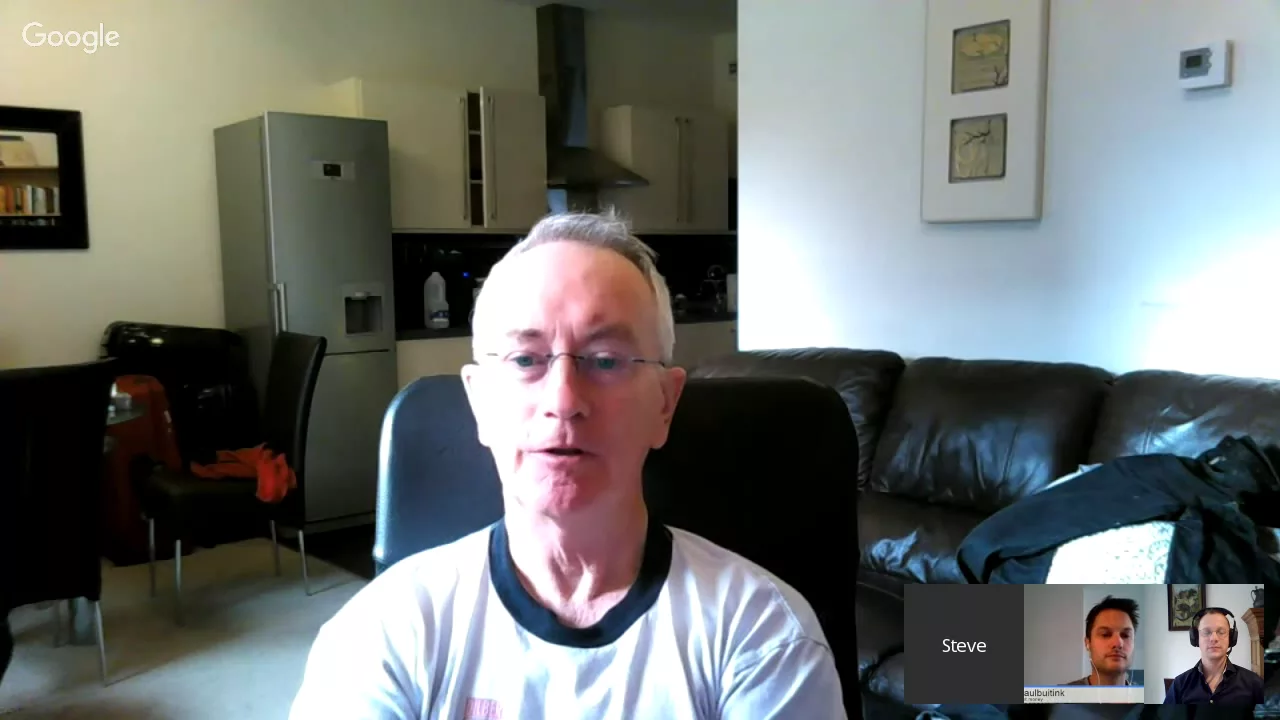
Debunking economics
De Week van Bitcoin · 5 Nov 2015 · 37:44
Economist Steve Keen of Kingston University talks with Paul Buitink and Jan Willem Burgers about debunking mainstream economics. He argues that neoclassical models wrongly assume equilibrium and sideline money and debt, that banks create money when they lend, and that official GDP and unemployment figures are distorted. He explains People's QE, where central bank money goes to households rather than banks, and says a cashless system would mean trusting banks and ending untraceable transactions.
Speakers
Topics
From De Week van Bitcoin; community: Reinvent Money.
Transcript
two new episode of the reinvent money podcast my name's Paul I think I'm your host and with me is my co-host a youngin embarrassed of the vu university in Amsterdam and also owner of coin company i am it up hi our guest today is Professor Steve keenness TV the head of economics history and politics department at Kingston University in London he also wrote the best-seller debunking economics and also he writes over at debt deflation and Steve welcome in the show I'm very honored to have you nice bigger um I ask the audience please if you have questions feel free to drop them and we can address them during the show let's first debunk if you cannot
miss before we talk about money creation and reinventing money and all the good stuff so Steve to talk about economics and debunking myths what is what is the was kind of the first myth you want to debunk here in the show well without doubt the most important myth that maintains the delusional view of the economy we have is the belief that it's an equilibrium system and this is not a belief that the founders had if you look back at people like Balrog and Jevons and Marshall and Clark all are the people who established neoclassical economics they all believed that what they were doing was static you know we could a point of intersection in a system with no time dimension to it and they thought that what would happen in
the 20th century was time would be added in disequilibrium would be modeled as well and they've completely successes have completely failed to do that they the ground construction these days they called dynamic stochastic general wait for it equilibrium and even though that the model actually mathematically has an unstable equilibrium they for stability on it by talking about agents you can manage to find the equilibrium because they're just right enough to do that oh my most one of my most recent point said if the agents that right what are they the market in the first place it's an insanely stupid way of modeling the economy in the 21st century now that all the mathematics were developed in the 20th century has been manifested in
computer software that can simulate and analyze non-equilibrium systems so getting away from the green fetish is the most important meth in the other myth of course which is relevant to your show is the method capitalism as a barter system now it's back to Ellen Smith road money has no essential role in their classical economics even though they're bringing in what they call financial frictions it's like adding an extra epicycle in the old Ptolemaic vision of the universe to explain it a planet you didn't know was there or it does some strange movement you didn't expect but it's not in any sense making money an essential part of how they think about capitalism so those two minutes together on my two favorite ones to debunk there are many like a Garfield and we can go ended but the second one is probably a fundamental
or to the fact that a lot of economies couldn't see the crisis coming because they lacked money in their equations and debt as part of an area and he said like my favorite there's Ben Bernanke's now touting his recent book the courage to axe I wish he had the courage to think before the whole thing happened because he's he dismissed Irving Fischer's debt deflation theory the Great Depression on the basis that lending is no more than a tree distribution from one agent to another and without enormous differences in marginal propensity to consume pure redistribution should have no macro economic impact well that's once i was part of one of my phrases as once misquoted by a journalist or properly
quite a Dietetics because even print that's total total [ __ ] I because it leaves out the capacity the banks to create money and in that process create additional demand and for the repayment of debt to destroy demand I was all people and Bernanke should know that money is created as debt right yummy he doesn't matter he still believes on the isn't losing a distant too bizarre to believe as being the head of defend and not understanding his own business model Krugman doesn't understand that they all believe in what's called the money multiply model which is not only a myth it sits in a sense it's empirically impossible for money to be created by real ending deposits in the in the chain reaction style way that they model it it's a it's a kind of it was a simple
simplistic myth that wasn't particularly damaging as an in first stab but when it's become ossified as how they think money is created it's a total catastrophe so I have no idea that money is created by dead or they'll say yes it is but it's limited by the reserve requirements of the central bank and the reserve creation from being strong reserve so it's it's all systems this isn't the case at every central bank though so the the the Bank of England has come okay good so you pick up I'm in the wall for the marketing of anunnaki now they're at their invitation three weeks tomorrow s key software on did they're aware of the nature they published their on our side so the Bank of England is a top-notch bunch I wish they could lock lock the
ninky in a room for a short while and help out until he understands money creation and they were the first to come out of the closet attitude to indeed confirmed acknowledged that the money creation is taking place and within commercial banks like ninety-seven percent of the total money supply that's right that's right we're like sort of a good coming up and belated coming out of the day it's okay yeah not yeah we're money days but before we talk more about money creation can I add just a few things that bother me as a as a sort of the layman when I watch when I hear people talk about economics yeah the manipulation of numbers like why are we always talking or usually talking about economic growth in terms of nominal GDP
because that's just when if we print more money we have more nominal growth but it doesn't really relate to I want to see how many if we grow as a society with more schools more products whatever but why is this there's not much focus on this nominal number that's just I mean but actually just agree with you there because i think they focus upon recalled real gdp growth and gdp is just the nominal right no there's two versions that the first measurement is adding up all the monetary transactions in the economy the second is then converting that into a notional what they call real amount using what's called a chained a chain weighted index so that when they publish a result about
GDP they're almost always talking about the real which is a deflated version of the nominal okay exactly in fact they distort the nominal because they include the value of some but not all transaction so for example they include in the value of gdp they include the rental income and by landlords which is fair enough but they also include the rental income imputed to be owned by owner occupiers and they factor that at the level of landlords are being paid for rental that means that that if you have a property bubble which pushes up rental incomes that turns up as an increase in GDP and if all sorts of the ways through massage history I think they've added to prostitution and gambling and drugs I mean we'd be much
richer included all the stuff we actually do but not olicity would distort the monetary flies in the economy and we get a distorted picture of monetary transactions and I really want to have it I want to have one measure of Gao just pure monetary so I actually think that that's didn't elected the need for accurate measure of monetary transactions as part of where we go so wrong in our thinking about what is fundamentally a monetary economy okay and then the one one more thing there unemployment figures I mean I know you also well you think their data fishy right and another one yeah I think in an especially in the states i guess but i guess across the world today anybody wants to do an interesting study you can go to the same place and just contrast the fallacious numbers that are
published for unemployment vs real numbers of the published for employment go to the San Luis Fred database financial Federal Reserve economic data brilliant data base and search for the employment to population ratio they look at that and one look at that sa us who are still in the slump aren't we then you look at the employment unemployment numbers are great we've recovered and back to the conditions the difference is the unemployment data is completely distorted by the questions they ask and also like they asked whether you look for work in the last two weeks are you available now for work have you worked for an hour or more voluntary or otherwise for any in any capacity so if you go and volunteer to help worker help at the local soup kitchen you're
employed or you need not unemployed rather that's why they counted that's and also the Americans one should be unemployed for more than a year congratulations not unemployment what I drop you off the figures so it's it's totally fallacious and that you the other the employment-to-population they simply count many people are our register is employed by their employers and they don't say oh well how how did you work last week oh well maybe there's one and a half of you there or none of this crap about it so the employment to population ratio is trustworthy that shows America is still in a sustained swell I liked what you in your book you also mention how they calculated in australia and i found out even more interesting so if you work one
hour a week yep you're not unemployed that's part of the ILO definition international labor organizer oh really ok ok i will so all the unemployment figures have that distortion too if you just work one hour a week you're no longer unemployed yeah yeah I mean I some people enough money went out to do that but not most of us thanks very much so it's it's nonsense saudia disease like a nefarious plan behind you do you think governments are doing it because they want us to give the impression everything is built at the same but it's not or is it that ignited it's a good friend of mine peter brian down in melbourne who did a study of all the various redefinitions are done over a period of about 20 years as about 18 redefinitions in that period every last
one of them reduced the recorded level of unemployment ok but there is a I mean I don't think of statisticians that are blind for that but the in the in the pressure they're getting from politicians and negotiations and so on I guess I think that particular so it's been massively distorted so if we were to compare our current situation today to say that in the great great depression and if we were to calculate unemployment in the same way could you give us an indication of where we might be at myrica in that case we'll be recording about fifteen percent I would say there is a thing called shadow stats which I've occasionally subscribe to that tries to maintain the more honest and unemployment data as well as more on a spinner of money supply and so on and I think something of the order of
fifteen percent is quite feasible ok and so compared to the Great Depression that is still a potentially less realistic let's listen America and a large part of the reason why is because of the larger government sector because if you go back to the Great Depression and take a look at the level of the deficit view that the government ran back there during the New Deal the deficit was no more than five percent of GDP we're because that partly because the d'economie government simply that much smaller so it couldn't run a large deficit even with the scale of the Public Works they got inserted story which accounted for five percent of GDP even Germany ran about a thirteen percent of GDP deficit during the crisis and America around fifteen percent so
that much larger scale of government in injection of money is why we haven't had such a huge slump but of course where it's not happening Bruce and Spain there in a depression yeah now yeah the self agrees in Spain is really like the Great Depression all over again is well I'm throwing yeah and shadow stairs by the way it's a really good side John Williams I think is that it's the guy behind the day you asked I will publish this inflation and destroys using all the definitions for inflation to include food and other things so it's definitely worth checking out that side our listeners okay let's let's move on to to money and let's let's talk maybe first a bit about people's QE or modern-day
Jubilee that you've been fighting for so much st speak she explained in simple words what people's QE is and how and why this is a good thing okay you have to think about the banking sector is having two layers to it because there's a banks that is that the banks themselves to positive that's the central bank then we deposit in the private banks that's what QE has been has been the reserve bank the central bank buying assets of the private banks yeah that's that's what's the actually been going on and what happens with it with the private banks that ends up being an asset swap so they go from having bonds were joining them income that they sell to the government
probably an inflated price so they come out of the well there and they get cash back which they don't learn much money on so there that encourages all the assets speculation they get into because if they move the money they use that money as banks to buy shares then that can inflate the value of shares and the money turns back up again in their reserves anyway so you have this weird already so who's benefiting from that process justify the fine sector may be anybody it shares and young boy shares and and property is menacing very nicely out of that mechanism but a trivial amounts getting through to the real economy people's QE would say rather buying stuff off the banks so it ends up on the asset side of
the bank's effectively by debt off the private sector to the money ends up in your bank accounts in my bank accounts independently of whether we're in debt all savers but any data to get that money injection from the central bank must cancel their debt whereas in Sims get a cash injection so it doesn't benefit people in the public who are in debt over people in the public who are savers but it does is use to reduce the level of credit base money and replace it with with fiat base money and it's going to be inflationary right yes deliberately not a lot army but we have to do is deflate the debt level that's the most important thing the dead level in most of the Western world now is running between 1.5 and 2.5 times gdp
and that's just dead of the household sector and non-financial businesses and that is a crippling level of debt which means any change in the rate of growth of dead has a dramatic impact upon the economy and the most likely direction now is down so that what you then have his money construction rather than money creation and that's why demand is so deficient these days so we need to get that level of private dead down from something of the order of one hundred and seventy-five percent another bad average from one hundred and seventy-five percent I think at about seventy-five percent of GDP or lower now you wouldn't want to do that in one bang but you want to do it in such a way that you don't destroy demand because if you reduce that debt by that much then you take a whole year's demand out of the
economy that's doing it without some compensating mechanism the IDF through modern debt you believe would would cancel that money but they have a compensation that people who weren't in debt also got a cash injection so it actually benefit people who don't have dead and don't have leverage in that sense it would also reduce our set prices which also have to come down so but I do it and do it a slow and experimental way I'm not about to go for a big bang and blendable if my theories are absolutely right I I want to be you know treading carefully over that but you could certainly try people's QE at the scalar thing like say 10,000 euros per person that's that would of course be a even income distribution of reduced income disparities that would reduce
debt levels maintain demand and shifted towards the poor in the working class in the middle in the lower middle class and I think that would be a rather good thing so in the in the classical world we used to see these kinds of resets quite frequently actually in the Roman and in the Greek world yeah we actually have organizations now who are pleading for this guy as well as in the internet'll ins what what do you think the chances of success are of making something like this happen I'm very low very low but the possibility is there because the economic malaise where m is going on for so long and this is a public behind I think the success of a jeremy corbyn in England recently that everybody all the politicians are
offering new versions of neoliberalism no neoliberalism only works because of the increase in the debt the financial sector debt that stimulated the economy as the debt was rised an average leg or it's not going to rise anymore if there's not over that stimulus coming through so many liberal policies are failing and it's been like seeing rather than being told takers castor oil it'll taste bad but it's good for you in having so I'll take this caster a little taste bad and it's bad for you yeah and what's happening is you're saying well bugger you may not gonna vote to you anymore yeah is that whole means of getting a electoral controls is eliminated and there's possibility that people like Corbin could go in the
direction of people's QE so i think that's that's the best thing we've got going for us that the neoliberalism no longer has any doesn't even work by accident anymore and it still promises pain and suffering for the lower class if you reward them at the upper class so i don't think it's uh it's political days are over so there's a chance for change i know i was elated to find the video where it says they're real liberalism because if you look at the blessing they will never make a favorable at the central bank something big make them there's nothing yes a lot of people called neoliberalism I don't see why it's liberal at all to subsidize the banks at expense normal people pitch explain that this is that this is a
twist that neighborhood prison didn't expect because they thought of bay d liberal I they deregulated the economy let the financial sector rip we'd get more efficient allocated resources and higher growth rate that's the whole story behind neoliberalism where a neoliberal economy according to the theory of growing more rapidly be more financially stable well throw that in the can the trash can it fits growing more slowly and being financially unstable so they've been forced into doing things they never thought that need to do to maintain neoliberalism but it's more the corporate isn't right them in the way the way corporates are beings are being subsidized overtly moreover it's expensive where people with some more corporatism death or it's just semantics maybe but i agree with with you that I people like fed up with this
whole notion of them being on the bad side of the deal and that's why all these all these people like Corbin and others are getting traction so do you think momentum is building up for I think I think they drag even answer the question from a Dutch politicians about people's QE yeah it's building but at the same time the collapse of this is a bit of a side effect that if we hadn't had the ludicrous incursion into Iraq we wouldn't be having local of refugees or becoming into Europe right now so that particular piece of stupidity by the neo-cons as opposed to Leo lives is possibly going to undermine political
consensus of any description in Europe and that could derail the potential consensus for you know things like people's QA and so on because are you going to get a rise of racism in Europe so that that concerns me quite quite strong is their design behind did you think no stupidity she put it on I mean I having a good debate with a good good friend of mine Linda to read I wrote the e-book bootstrap America and she was she made over we were both talking to a friend who saw a conspiracy theory behind the invasion in Iraq and we both had simultaneously quoted something we knew from from Bush George W he got ambushed by the media and a
golf match playing golf somewhere was being asked about way to go way to go in Iraq and he finally turned and blurted to the tech camera right and try to kill my daddy really comes down to something as visceral and testosterone based as that on top of the stupid argument that you could actually invade a country and and take over its oil resources effectively so that was police don't think it's an intelligent was an intelligent decision to go into Iraq and now of course we're dealing with the refugee and the diocese and all the stuff this is created so yeah I don't think though you know this wasn't deliberate it wasn't sensible it wasn't thought out and so let's talk a bit more about money and credit creation are you
I thought I heard thinner and your interviews a debt you are nuts and so much a fan of these new proposals led by positive money in the UK or similar organizations in other countries that advocate for for reserve banking and I think you're still an advocate for fractional reserve banking to a certain extent right if I knock reporter I levick for something that doesn't exist this is okay will you explain to call the fractional reserve banking it is which implies the whole money multiplier model it is not in any sense what the model implies the reason banks hang on
to a fraction or preserves is because their fundamental reason for that is that if you have a bank run you've got a capacity to provide ten to ten percent of your customers with the money they want when in notes and coin and that's the reason we have a fraction held there if you look at the there's actually a wonderful people I bike I called O'Brien a federal reserve paper about 2007 I think and he went through their rules in about 20 osed countries and in America the rule about 10 holding on ten percent that so called fractional reserve as if that's how money is created the rule is that they have to hold ten percent of the deposit the household sector there is no reserve I mean for the business sector there is
no reserve requirement for overseas national money money funds so when you look at it only about two percent of the american money supply is actually related in any sense to a fractional reserve requirement so it's nonsense so what I'm what I'm in favor what I'm not a I'm not a code not a critic of the arguments for a hundred percent reserve money but I think they're there are there are a reaction to a model of the money supply which is not how money is actually created and they also to me they have the danger that you wouldn't necessarily get the money growing we supply growing in the organic fashion that is often needed in capitalism and and if banks are required to make money
on the marg and rather than on the volume and become it they can make money on both you may get a more conservative monetary system which would be good if they don't fund asset bubbles would not say crush it or they don't fund entrepreneurs are working capital for firm so it's it's more than just getting rid of private money creation and once you do it then you have issues about yes you fail and the private banks are still going to be there in that system of course if there's any any crisis that comes out of the economy will be blamed on the monetary authority and let's go back to private banks where we all knew what we were doing again so my fear is about the capability for that system to be politically undermined by one or two thousand get the banking sector back in
there again get a wrong explanation of why they fail and we'll be back in a private money system once more so what are the political steps necessary to to come to your ideal word so first of all we have people's QE and it can be done in a day profession I guess in order to do to make sure it works and we don't go full win you know what is what is what will be the next steps in order to avoid the next debt build-up to take place over time being after make it may happen I get very difficult to banks to make money out of funding asset bubbles so I would for example I would abolish margin lending completely they're going to go on the stock market is your ma and because that's a leverage as a major part of where you get the a surprise but
levels and volatility from that'd be in very much limited limit the extent to which you can have borrowed money in equity which undermines the whole consider to begin with then when it comes to lending for house for a property I would I've got a proposal i call the pill which stands for property income limited leverage which would add out of control to the amount of lending that could be done by a bank to finance a property purchase to some multiple of the income earning capability of that asset so an imputed ring calculation but say it's ten times the annual rents if you're living in a place which rents for there's a local place i'm writing here rents for about safe twenty five
thousand euros well the most anybody could borrow to buy this place would be 250 thousand years now that's a lot less than it would currently sell for because the price has been inflated by leverage what it would mean is anybody if you had a two people fighting over the same property with the same income the one who would win would not be the one with higher leverage which is the current situation which where we get encouraged to take out more and more debt with max you'll be the one who saved more out of their income so you put a negative feedback system between asset prices and leverage rather than the positive one we have right now and then I'd also want to enable banks to make money out of Flint into entrepreneurs so what I call ills which is entrepreneurial equity loans
would be that when you're lending to an entrepreneur rather than just getting the interest payments you would take the banquet acre proportion in the equity of the company and if the company succeeds and they gain dramatically after an increase in the value of the equity the company fails they write that equity off and they might believe they did that way if you wit out all with one in five entrepreneur succeeds you may lose money on four and make a fortune on the fifth then it would encourage banks to lend to entrepreneurs but you could also manage that sort of idea through enabling things like Kickstarter and IndieGoGo to be money creation systems as well as people allocating their existing money to a project so anything that enables us to fund entrepreneurial behavior did you
want these platforms typical money courage as well so that needs to be there so they would get a bank license that are they what they trade would be legal tender as well or how would you see that well it's possible it's something at the moment if you're I got supported quite a few projects on Indy on Kickstarter only one waiting get a 360 degree camera that I've been I supported two years ago a new Australian made tablet that's also about two years out of date towards behind schedule but supporting stuff like that at the moment is putting some of your money into it now if you've got something else which was a like a a certain you know sort of electronic wallet that you could use for that sort of stuff with a state put the money in your wallet only for the sake
of funding those sorts of ventures and then you had some sort of equity position you might take as well and the stuff you've funded that could be way of harnessing sort of crowd intelligence to decide what gets funded rather than relying upon banks to make the decision so it's something like that that gave us that organic nature of banking that shrimp hater explains so well as the positive argument or private banking but do it in such a way that we don't get the negatives will all scene where they finance asset bubbles and Ponzi schemes and how well do you think regulators in let's say the Western world are capable of imposing these kinds of regulations so one of the things that we've seen in recent years is as soon as we think of
regulations banks find wait ways to escape them yeah I think one of the consistent problems is probably that we're understaffed as well as regulates what's your perspective what's your perspective on this new bond right sandwich is legally design so make it illegal to get a loan more than 10 times the income stream expected from a property and handed out of law courts okay and and have regulators were actually like prosecutors rather than regulators but because regulation yes will always be behind the track and I remember having a few conversation with people leading people in the bank saying that it's the only industry you invite the criminals in viscosity are going to
change the laws criminals and saying are they listening to how are the new regulation their minds are thinking over K how can we get around this one and that's before the walls put into operation so the law might take like I have meetings to discuss proposals to translate or illegal a regulation from the finance sector and six months to a year later the law submitted they've already designed how to get around it if they want to get around it so Randy this weekend gia which came out in a present island ing actually drafted the legislation with regard to the cocoa bonds are on the sort of good never a huge fiscal benefit that normal companies and cannot enjoy so yeah interesting and okay well let's
see Steven what one of them one of the things I find very interesting is an ability for people to create their own money out of the outside of the system things like Bitcoin what's your take on that well the trouble of a bitcoin is volatility the price on my back saying it apparently taking off to the stratosphere again right now I in the hike actually makes this point as well which is quite a bit intriguing the currency to work needs to be priced stable so the price you can have some inflation and deflation approach we buy money with but you want the value of money to be relatively constant it quite is designed like a version of gold and very expensive to mine and so on it's the whole range of things which means it
sort of created or people with a very fallacious version of how many should actually function so but that's negative against it the positive in favor of it is Cypress but as soon as though EU decided this concept of bailing in depositors which means when they have a downturn let's destroy money isn't that a great idea well that completely the Jew demise to form of money which is outside state intervention and Bitcoin and stuff like that are outside state intervention so when you've got a moronic and that's the only way to describe that particular decision veronic decisions made by people are supposed to manage the monetary system that legitimizes something state card touched no but I'd rather more stable version than between a Bitcoin by you're
trying to emulate goal by thing really hard to find at the mining routine and by being set up in such a weather there's only if SAS said proportionate even though they can be infinitely divided I'd rather see on organic money system where you get people in a particular social group who can create money in their own social group and then exchanges between sort of individual central banks effectively to enable a multi money transfers so but that sort of stuff is the only reason that sort of stuff comes about as the credit base money system is collapsed in some way and so I think they're great systems when there's a breakdown and we should have more of them and there were certainly successful when they happened
in you know in Austria during the Great Depression before they got shut down by the central bank there at that time I so I'd like to see them develop right now because there is near the privacy sector system has failed we do need an alternative at the moment so it's like a little brisk amsterdam weird breast garland on a few weeks ago mean you know from from the London scene buddy he also AC sort of bed like a bit go like a I can Dark Knight almost and two as a cancer the countervailing force to to keep the powers that be in check yeah so it is impossible to create stable currencies outside of fiat currencies it's possible but it never these done it on a grand scale us yet did one of the one of the reasons I've got against that
in general is that the world's got enough bloody complicated choices in it without having to choose which sort of money you decide to take on and potentially making a mistake and getting wiped out by the near classical's are greatly exaggerated the benefits of choice and sometimes you just don't want to have to make a choice you so they want something that works and so I'd rather get you know you admit the credit system is broken down it doesn't work we need an alternative but not expect us to live in the permanent state of all Turner's where you're tossing up with what money you're going to go use can buy coffee with but there is a benefit to having a certain number of alternatives right looks like with cereal in the US you look in the aisles and there's 10,000 kinds of cereal well I don't need 10,000 but it'd be nice to
have maybe 10 or hey a bit of variety is useful okay great well thanks and Marcia steve has been a very insightful and enjoyable half hour ne-yo be there may be any any final questions from your site forum for professor yeah maybe maybe a nice final question would be what what's your take on so we have deleveraged i guess to some extent since the last financial crisis so though I think recent statistics say we're leveraging more and more again what's your take on where we currently are whether the what's the risk what risks are we currently facing where we've tuned Japanese that's been my fry since 2000 I meted the Japanese mistake with
much the same levels at the private of Japan has now it's as they've been stuck on one hundred and seventy five percent of jelly appears their private debt level for about the last 15 years and death dynamics of determine private did the limits that determine the ups and downs of that economy when I stuck in the same situation without the capacity to explore to the rest of the world that Japan had at the time so I think we're stuck in a stagnation caused by the level of private debt unless we get it back down substantially without causing a decline in demand we're going to be stuck here 25 years as the Japanese have been we got a question from the audience by the way and she didn't Twitter from Jonathan rabbits TV ask you can you talk about monetary velocity-wise it's
falling is it related to the bush for a gaseous economy what was what what is popeyes what falling why is monetary velocity oh yeah the velocity has been falling because of the sheer increasing the levels of private debt so dramatically that you've got most that probably that's gone into asset markets and asset markets turnover even there's an enormous volume of turnover of financial assets and transactions each way that's not measured by the measures for money velocity which is effectively the amount of money in the economy within / GDP how many tolerability GDP divided by the amount of money how many times is that turnover because more and
more the money supplies caught up in the asset markets you're measured volatile velocity of money in the real economy declines and at the same time when you have a crisis people's responses to tease to try to save money now when you save money you can't create more money by saving you just change how fast it turns over and which bank accounts it sits in but that may increase private bank household accounts that they don't spend as much but it slows down the rate of turnover of money which is part of what we get a decline from in the first place there's a very dangerous positive feedback making it in between economic declines and velocity of money hmm ok and the one final thing I are you worried about the cash economy that people lose their
right to privacy it is to transact anonymously is this something that keeps you up at night look isn't can be up at night but it's so people deduce that but not it going to worry about that one so there's a lot business obviously given the type of society we live in the type of monkey we are we do need to have some transactions that can't be traced an awfully illegal reason you don't want your wife to know about it what do you bother your husband for that matter Ashley Ashley Martin it's very much the husbands who are doing that particular one so but yeah there's always going to be something where you don't want to be socially controlled and the trouble is you go cashless then everything is recorded which again will be a reason
why an on state financial system might have a place if they actually go cashless but I going cashless going cashless means you've got to trust the banks yeah but in the residence and it isn't particularly hiding something I've been really a hundred thousand dollars in the bank and I want a ninety-nine thousand that in cash now ok because you say don't trust the bank until we don't have that if you there's no cash you can't do that so that's a real danger you need to trust us and at the moment reason not to thanks and we'll see if any any closing remarks from your end but just a quick call to the audience here you want to support the sort of work I'm doing help me fund the
development of minsky further my software package minsky to go to my debt deflation calm / blogs website you'll see a keep Russell Standish on the Minsky project had their make a donation yeah definitely people should do that and also did you follow you on twitter of words because you're a prolific twitter at at prof steve King annals people need to like and share this video because we put a lot of time and love into this so please just like and share it and then you make us happier so thanks so much Jovi Lim for being a co-host then and Steve we're from being on the show and and hopefully next year we can greet you in the holland for for next episode of the reason money he sent a touch that okay okay good my bike back