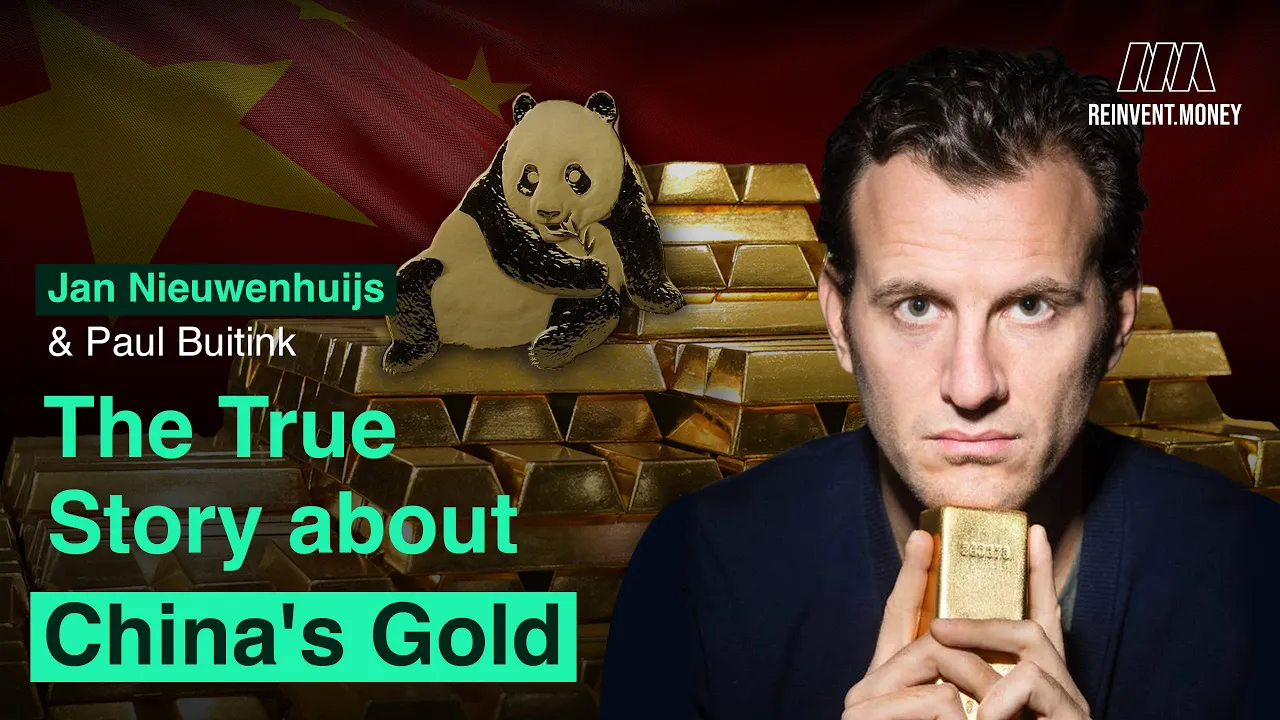
China's Gold Buying, the Shanghai Gold Exchange and Gold as a Reserve Asset
De Week van Bitcoin · 9 Nov 2025 · 42:56
Paul Buitink talks with independent gold analyst Jan Nieuwenhuijs, known for estimating China's true gold flows from customs data. They cover why China has long valued gold, how the Shanghai Gold Exchange works, and why some imports are reported through customs and go straight to Beijing rather than through the exchange. Nieuwenhuijs argues that China wants the renminbi as a trade currency, with countries swapping renminbi surpluses for gold as their reserve asset, and that the dollar's weaponisation pushed the People's Bank of China to buy.
Speakers
Topics
From De Week van Bitcoin; community: Reinvent Money.
Transcript
The complete private market went into discount. Those people were not buyers and yet China imported 100 tons. Now that is the smoking gun that the people's bank of China is buying that gold and it is importing it report. It's being reported at custom statistics. Does not go through the SGE. It goes to Beijing. Gold is the achilis heel of the US dollar. So everybody's looking at gold these days just because of people think of China started this whole crazy bull market. The end goal for them is have an international monetary system that is now very uh dollar centered in which they do not provide the world reserve currency so to say in the way
that the dollar does but they want to have the remimi as a trade currency and then when countries have a surplus they exchange those reimbies for gold to have gold as reserve. If you want to have a plan B, what they want is a plan B that works. [music] And it only works if everybody participates. Hi everyone and welcome back to Reinvent Money, a podcast about money and power with me, your host Paul Today I'll be talking with my old buddy and fellow Dutchman independent gold analyst Yan Newahas known for exposing the true gold flows to China which are different from what China's formerly reporting to the
IMF. Today we're going to discuss in detail how much gold China has, how the Shanghai gold exchange works, why China attaches so much value to gold, and what the future role of China and gold will be in our global monetary system. Hi Yan, good to see you mate. >> Hi Paul, how are you? Yeah, I'm I'm great. Um, we used to hang out in Amsterdam a lot and discuss the gold market over a cup of coffee, but you realized well before me that continental Europe is going down the drain. So, you fled and now you're based in Boner in the cur in the Caribbean like a bastard.
>> I live in the tropics. Yeah, it it life doesn't get better. No. >> Yeah. Good for you. Look, Yon, you've been um doing a lot of research on China on China's gold. Um, you're also the go-to expert for a lot of mainstream media when it comes to understanding the true Chinese gold holdings. Um, so let's just just start with a with a basic questions is why why does China value gold so much? >> Well, first of all, it's historic. So they have a long tradition uh in saving in gold. China had a lot of monetary systems. They had they used jade as money, silver, paper, copper, all sorts of things, but never gold. So gold was
always always a store of value for them and um there was a a break uh in that when um the communists came into power and it was forbidden to own gold. But when the market was slowly liberized starting in the 80s and especially with the launch of the Shanghai gold exchange in 2002 um you know that old love came back and also because the government started stimulating the people to buy gold because they started to see that you know it's very important for a nation to hold gold to be resilient against external shocks and um to live through you know monetary cycles, business cycles uh big changes. Um so one part is historical. The other part is of course
that China has been an economic miracle uh [snorts] for many years and growth was was very large and and to keep their currency low and to boost their exports they accumulate accumulated a lot of uh foreign exchange reserves and those were primarily dollars uh so many years ago and when they they knew before but you know in 2008 it was a first sign to them like ooh you know things can go south as well. So, we might as well hurry up with our plan B and that is gold. So, then they um started motivating their people more to to buy gold. The PBC um continue to buy
gold. [snorts] Um that went on for a couple years that mostly the people bought gold. It was really thousands of tons every year that the Chinese people bought gold. Um but after the war in um Ukraine early 2022 and the the weaponization of the dollar which is the you know the freezing of dollar assets of Russia [snorts] that really scared the people's bank of China and that's when they ramped up um gold buying a lot. I can uh show you uh some charts about that. Uh so I'm going to share my screen here. Uh entire screen this one.
So if we look here um this is a chart um that on one hand shows reported buying. This is this is what the PBC reports to buy every quarter. Now and we'll get to this. This is my estimate uh of what they buy in total. Uh so with reported and unreported buying or secret buying. So what you can see is um in 2022 uh that um total buying estimated buying exploded um and you know their reported buying also went up a little bit. Um so there was a correlation between the two but you know they they only declare or report to the IMF you know a small
percentage of what they truly buy [snorts] and um so it's so much more than than than what is reported and uh that of course has an impact on the price. So if we look this is an old chart it's not not updated until today. Um but this is what they did. They broke the gold market by uh breaking the peg between uh [snorts] the gold price and a 10-year uh tips yield which is you know in financial markets is the the real yield. And so that was always and we it's funny enough I was just thinking about before this interview with um about an interview we did in I guess it was 2021 or [snorts] uh around that time and uh I was in the Netherlands. was in
your uh studio at your company and I we were talking about this correlation and I said it has to break at some point because it doesn't make sense and um I didn't get it completely right in my logic and whatever but um sure enough a year later it broke and this is this is purely by the PBC this is what the PBC uh did they broke the peg and now uh you know it sometimes it was even an an um let's say that the correlation went the other way because you know if real yields go up you can also say well um you know that's that's um for currency not a good sign right I mean if you get hyperinflation yields go
they skyrocket and uh [snorts] so it this um changed the gold market big time and it was primarily because of the PPC started buying here and these these are quarters right But my numbers are very much based on estimates by the World Gold Council who does uh field re research about what central banks in total uh buy every quarter. So you see it here exploding in Q3 that could have been QT Q2 uh as well but they just you know uh lumped it into Q3.
Um so but but it's very clear what happened and um yeah so that's bit of a long uh answer to your question. >> Yeah it no interesting and and also very clear just what you said is that after Russia freezing or the west freezing Russian assets you you clearly see a big uptick in both reported and especially unreported buying. So I understand the reported buying is that's what they disclose to the IMF. But how does the World Gold Council come up with the with the other numbers than the blue um bars in in your chart?
>> Well, the blue bars is something I calculate. That's not what they um uh publish. Uh but I calculated and it's my analysis is based on a few sources uh or or on on a few let's say um elements. First of all, I I started seeing something really strange in the Chinese gold market. And I guess I also have a chart about that. The blue bars is something I calculate. That is not something um the world gold council does. What what the world gold council does is um they calculate um central bank buying what they think central banks are buying in total.
>> [snorts] >> uh and they use the IMF's number and that is you know what what all central banks report but they also do field research and the world gold council you should know is a entity that has a lot of connections with billion banks with uh refineries with transport companies with uh central banks with all the the you know the sectors in in the industry. So they get intelligence and uh based on that they they come out with uh their estimates of what uh central banks in total are buying. Now really easy. If you compare what the world gold council reports that central banks are buying every quarter to what the IMF reports central banks are buying every quarter,
there's a a large discrepancy. And my sources at several um companies in the sectors I just described say well that is largely due to the people's bank of China. So [snorts] that's good information but you know uh that doesn't make a case because there's no data and not really a smoking gun etc. So, but I when I heard this, I was all already on the track of of of finding it so to say um because um I found some strange things happening in the Chinese gold market starting in 2022. Now, here's a chart uh called China uh gold supply and demand. And what you see is uh mine outputs, net imports, and SG
withdrawals. Now in the years prior to 2022 um mine output and net import was always lower than SGE withdrawals and that is because in China the SGE the Shanghai gold exchange is the central exchange through which most of all the gold flows. So if uh gold comes out of the ground in China it's sold through the SGE. If gold is imported uh it has to be sold first through the SGE. [snorts] um scrap supply also or disinvestment that usually goes through the SGE. So you know you have a very easy to understand formula that is mine output
plus net uh imports plus um recycled gold should equal withdrawals. You know we're not going to go into details about uh uh stock carryover every year but you know that's basically the simple formula and it always worked. you know, if you uh compared SD withdrawals to the other uh that's the demand side to the supply side, you you it all made sense. Then suddenly in 2022 and the years after, you can see that there was a lot more gold going into China than being withdrawn from the SD vaults.
Now that is because um the people's bank of China does not buy its gold on the Shanghai gold exchange because gold there is uh quoted in Renmi and the people's bank of China wants to diversify its dollars and you know you can't buy gold with dollars on the so they go to London they go to refineries uh abroad they go to Switzerland uh all sorts of places uh to buy um big bars you know not the consumer type bars big bars with their dollars.
Uh so they don't buy it at the SDG, but what they started doing in 2022 is they said, for example, to JP Morgan in London, okay, we want to buy 50 tons this month and uh well, you take care of the shipping. We just want to, you know, bring it to Beijing and um ship it to uh Beijing. So JP Morgan ships the gold to China. Then in China, JP Morgan has to deal with the customs department and then that is why it shows up as a net import in customs statistics. Although it does not go through the SGE, it goes to the vault in Beijing.
Um and and and so that is the explanation for what you see in the years 2022, 2023, 2024 is that there is apparently a lot more gold going into China that has not flown over the SGE. Now another piece of evidence is uh taking a look at the premiums in China. So here we have um a long-term long-term chart by gold charts us and you should know um about global gold flows that uh before the war in Ukraine it was pretty easy it was pretty understandable when gold moved across the globe. um the west was driving the price and if the west was um driving the price up uh you saw a
lot of gold from Asia flowing through towards uh the west and um premiums in um um in the east would would fall to discounts because they were selling and uh and vice versa. So if the west was a seller uh premiums in Asia would go up. Now you see that here in the first green circle you see here in 2013 remember that big crash we had in gold uh then the SE premium went up because um you know when the west sold uh the east was sort of the the shock absorber they would be buying you know they had a long-term horizon they thought oh fine if you want to sell gold we'll take it we'll back up the truck so the premium in China would go up and [snorts] here
you see vice versa um you know the price in 2020 went up and what did the Chinese do? They uh sold, you know, taking profits um because and and you see this this steep discount here um in China on the SGE because it's not allowed to export gold from China. So what do you get when people sell in China? The p the local price goes down relative to the the international price. Now here in on the right in the green circle here you see a kind of a mixed picture. um this this how the gold market functioned before the war in Ukraine it's not like that
anymore and we can see that uh yeah here for example so here is a chart uh from 2025 and you can see here for example that um the price goes up and the premium also goes up so the Chinese the private sector when I'm talking about the uh SGE that's always the private sector. So we saw the Chinese are also driving up the price now the Chinese citizens but here something else happened in uh September the price went up the Chinese thought nah not for us they started selling the STE flipped into a discount but then if you look any I don't have a chart of
that but the China did import 100 tons of gold in September [snorts] so the SGE you know the the complete private market went into discount. Those people were not buyers and yet China imported 100 tons. Now that is the smoking gun that the P people's bank of China is buying that gold and it is importing it report. It's being reported at custom statistics does not go through the SGE it goes to Beijing. I have another chart here of uh last year 2024. You saw in the months uh September October November December all through those months the SGE was trading at a discount and still you know
see the yellow bars the uh gold imports were about 100 tons a month. That's that's the People's Bank of China very clearly. And so um things like that show me how much um the People's Bank of China is uh is importing. You can also take um but it's a more complicated analysis uh the direct exports from the UK because the UK only you know stores large bars and everything they export must be large bars and if that goes to the um to China then you kind of know especially when the SG is trading at a discount that's you know the people's bank of China buying large bars in the UK.
So that is more or less the the the analysis of um how uh how I know the people's bank of China is buying gold secretly. So you can all stitch it together and you know make Excel sheets and and make your analysis from that from what I just said. >> Interesting. Uh a bunch of questions. First question um so I I so why is the Chinese uh the the PBC buying secretly? Why why are they not just reporting everything was first question?
>> Uh several reasons. They're they're they're cautious. um on one hand they have an incentive not to drive the price up too much because if they would be honest about what they would be doing now you know if if they would go talk to um reporters or journalists from the Wall Street Journal and they say hey look we're going to sell treasuries like there's no tomorrow and we're going to buy gold you know uh only gold with it that would like double the gold price in a day because they're they're still sitting on I don't know uh from the top of my head at the moment but they're still sitting on 700 billion of uh treasuries, I believe, and probably some other uh dollar assets. Um so they're, you know, they they want the the most
value for their money. So what they do is they buy it secretly. Um so the price doesn't rise too fast. Um and and and in that way they can buy more gold with their dollars. They also um want to signal the United States that look we're you know we're not joking here. So they also want to signal something and and and uh drive up the price and um to yeah um signal the United States to I mean you know of course gold is the Achilles heel of the US dollar. So everybody's looking at gold these days just because the people's baker of China started this whole crazy bull market and I'm not talking about the part from 2015 until
[snorts] uh 2020 um know that it was going up but since the war in Ukraine and especially the last two years I mean people are quite serious looking at gold like hm maybe you know this can hurt the dollar and uh the United States has a problem with it uh with its fiscal policy and also with the weaponization of the dollar which you know which doesn't make a lot of friends worldwide. >> Yeah. So second question if they're if they want to buy >> [snorts] >> uh secretly why would they still use the customs channel and making it leaving it real in such a way that yan house can can can find out what they're buying it.
They could be smarter about that. Right. >> That's a good question. Um to be honest I do not know but uh I think it has to do uh with the two things I described earlier this two incentives incentives that they have on one hand they want to keep it uh they don't want want to show everything they do to keep the price a bit low and not make it up uh go quickly up uh too fast get more bang for their buck. and on the other hand they want to uh give the world a signal about what they're doing and you know stepping up their their game uh in terms of darization and you also read about uh Cambodia for example that is now storing gold in China and uh China's also and
that all comes from the people's bank of China um the gold market in China is purely managed by the people's bank of China thece is a subsidiary of the people's bank of China what they're also doing now is setting up an [clears throat] international clearing system in Hong Kong and after Hong Kong there will be other cities. So the end goal for them is have an international monetary system that is now very uh dollar centered in [snorts] which uh they do not provide the world reserve currency so to say um in the way that the dollar does but they want to have the renimi as a trade currency and then when countries have a surplus they exchange those reminis uh for gold to have gold as reserve that's a neutral
asset that's a lot better than dollars and um but they still you know have their influence with the remimi uh being the trade currency and not the dollar. >> Yeah, let's let's talk about that a little bit more. But first um a few more questions. So I can imagine that China uh because they have a huge um mining supply as well every year they they they basically get all the gold from the mines and also add that to their stock that they would not disclose that. So you have the reported buying. You have then the the customs uh flows that you've discovered and then I guess on top of that there must also be even more
secret flows of gold coming from their own mines for example. that also don't go through the SG but directly from mines to refiners to uh the people's bank of China or do you do they see that differently? >> My I see it differently because um what I explained a little bit in the beginning how the uh gold market the domestic gold market in China is in is structured. The [snorts] domestic gold market um is is is separated from the free trade zones. Right? So that's a little bit of a a detail to add, but the domestic gold market um is structured in a way that most supply flows through the SGE and most demand also meets at the SGE. So everything goes through the STG.
Uh the people's bank of China designed it this way so they can uh assure that the quality is good on the SGE. They can monitor everything that's happening. Uh you saw the tax rule that was uh implemented earlier this week. uh that was a bit of a scare in the gold space but that also is an incentive to make more of the jewelers and um all the entities in the gold market members of the SDE again to make more gold flow through the SE. Now they have a lot of incentives rules tax things um to make um the domestic mine output go through the SGE and it goes to the private sector. So everything that happens in uh China through the CE that's that's all
the private sector. So the domestic mining put that all ends up um in [clears throat] the people's hands and that's not something um the people's bank of China is buying also because you know if they would be buying uh gold from from local mines they have to pay in renimi and they can't diversify their dollars that way and you know if they pay in re mimi they just expand their own monetary base which is inflationary. Now, but I can imagine if you want to keep your flows secret and you uh have certain mines in your country, maybe some of them are owned by estate companies, then there is an easy way to keep those flows secret without utilizing S SGE, but just doing it
discreetly. Um but yeah, in any case, what are your numbers then now? because formally they're supposed to have um like 2,300 tons or so at China and and what's your number? >> My calculation at the end of uh the second quarter is uh 5,300. So they have 3,000 tons more uh gold than that's more than double >> than what they report to the IMF. So that's significant and it makes them the the second largest holder after the United States. more gold than Italy, more than France, more than Germany, more than the IMF and um and yeah, I think I um of course a lot of that was was acquired since the war in Ukraine.
So, and it it rests on a on a good um analysis. I think you know uh I truly think that you know when the SG is trading at a discount and you still see 100 tons going into the country that is the smoking gun about the people's bank of China uh buying. So um yeah it's it's really significant and and more and more media and people are taking notes since I started writing about this I guess one or two years ago. Um, Goldman Sachs was the first one to copy my uh, research.
Then it spread over some, you know, obscure financial blogs um, on the internet. But then came Bloomberg, the Washington Post has reported about it. Time magazine, uh, I've been been called by a lot of other journalist. And um it's funny that if I can uh share this, journalists have, you know, when I first come out with this type of news, they're just they're not allowed to to share it by their editors because they need to have a second source and blahy blahy blah. And no matter, you know, how much you know about the gold market and how and how accurate my analysis is, they just can't publish it. But then if Goldman Sachs does it and Bloomberg does it, then the Washington Post can do it
and Time magazine and you know and then they suddenly all can do it. So uh the cat is out of the bag we say in in Dutch and um and and that's also why um the gold price is going up as fast as it does now. >> Yeah. So a lot of the gold price rise we can credit you for then Yan. Uh I didn't say that but uh no in my dreams. >> Yeah. Hey, but then um the US has slightly over 8,000 tons. Uh then China is is around 5,000. Um number two then, but if you look at the number of people living in China or the cap per capita basis, there's still a lot more for
China to buy it. if if they want to mimic the US, then they would probably have to have four times the the amount of that the US has. So, they would go to 30 32,000 or so. Is that um realistic? Do you think they strive for an amount like that? Or what's their long-term goal when it comes to uh acquiring gold? >> Well, if you want to compare those countries, it's not only important to look at citizens, but also compare GDP, compare uh the money supply in both countries. And um we just talked about, you know, I just made a distinction between monetary gold owned by the central bank, but also private uh privately held gold. And next to this number of 5,300 tons by the PBOC, but
the um citizens of uh China, the people also hold 25,000 tons of gold uh which is probably more than the US citizens hold. And it has all been acquired since 2008. Most of that has been acquired since uh 2008. So that's a lot of gold. And um I don't know what their end goal is. Uh I have read uh articles from uh directors of the China Gold Association that they want to have more golds than than the US, but you know I it didn't say what their time horizon was or their long-term strategy. But I do think that um you know they want to have more gold.
They want to diversify their dollars. They want to bring back uh their treasury holdings to not have this interdependence with the US. Um but they also just want to you know um revolutionize the international monetary system by what I just said uh trading more in reim have partners in the region that store their gold with them or at least you know exchange the remimi uh for gold at the SGE the Shanghai international gold I should should say in the free trade zones that is and and in that way move away move away from the dollar.
Yeah, I I read also in the latest World Gold Council report that the main reason for Chinese to buy gold um has also been the tensions with the US. So every time you see the trade tensions between the US and China flare up, you see Chinese buying more gold. And I don't expect unfortunately to uh to see these relations um deteriorate over the years when the US is basically losing its um hedgemony status. Um some other interesting uh points to note then is like you mentioned already Cambodia willing to or to store gold in in China and Shenzen at the SGE even though they don't uh confirm but insiders say that Cambodia is going to store gold there.
Um of course London, Switzerland, the US those were the traditional places you would store gold. Now China is also becoming a an hub for for countries. Do you believe it makes sense for western countries such as the Netherlands for example given the new um geopolitical order that we're entering, would it make sense for Holland also to to have some of its gold stored over there instead of New York, London or Canada where we currently store gold?
>> No. No, [clears throat] no, no. You can better store your gold with uh with friends that have uh the same values. um you know for for Cambodia for example it's it's um it's a bit more easy because they're close to China and they have more more relationships with China. China does a lot of investments in Cambodia and um and it's funny because in the in the Bloomberg art article that exposed this, it said Cambodia is not moving gold towards China, but it will be um buying gold from surplus rem a new gold reserve and they can repatriate as well. But um that was very significant for me that they you know
when they have surplus remi from uh trade surpluses they will buy gold with with those remi on the Shanghai international gold exchange for the Netherlands you know um what we have seen for example is that you know without being um without being judgmental about it you have the east with different values and you have the west with their you know civilizations and for example Maduro the the leader of Venezuela, which also has a different point of view on, you know, he's a dictator, let's be honest. And um, you know, he was blocked from uh having access to his gold in the UK. So, that can happen to, you know, to your gold if you if you store it with unfriendly
countries. So, it's it's probably going to be China's friends who store gold with them. And countries of the Netherlands, they will store the gold in the UK because that's also a liquid market, right? You only want to store gold abroad because you might need it someday in some big crisis. You need the gold as collateral to get new loans to I don't know solve a balance of payment problem. I don't know. Um but for us it doesn't make sense to do that in China also because um then you can yeah get a rein loan and I don't think that the Europeans uh need that. Maybe for now they're not interested in that, but
maybe in the future it becomes very relevant for uh for European nations to get their hands on remi and but yeah at the same time we see a trend of course towards repetriation. Uh >> if if if if there is a scenario in the future in which uh the remimi is really dominant uh global currency then yeah maybe it would make sense to store some gold there. On the other hand, still you know only if you know relationships are good and China is not really known for you know [snorts] having a good rule of law or um things like that and it still has a closed capital account all these things that um used to make you know uh the dollar from the United States the
world reserve currency. So um yeah it could happen of course but um I don't think it's likely also because there's not only in societies in the west for example a lot of polarization but also globally so I don't think ties between let's say Europe and China are going to get any uh better uh in the coming years >> and at the same time we also see a reatriation uh move that a lot of countries or more and more countries decide to store the gold on their own soil. I heard Serbia they want to store everything in their country. Indians are also uh having already stored more than than half of of their gold uh on on their own soil. Um is that also
something you are going to see more often in the future? Yeah, that that all um ties in with this, you know, economic nationalism and del globalization and ddollarization and less trust and um also with you know after the second world war we had a a great economic boom um and with an economic boom goes more trust in credit assets, more trust in each other between nations and now that is um that is falling apart. So there's less trust in credit assets uh for example US treasuries, there's less trust in your neighbor. So um that's why you see this beginning of the
dollarization which could take another you know decade. Um but also yeah less trust in uh storage facilities like in London but also in New York. Strangely last time I looked um foreign gold foreign held gold in in New York is going up. I don't know which country is storing more gold there but um I think it's clear that you know um a lot more gold is now being held on own soil also because for example Poland is not only repatriating gold from uh from abroad it's also just buying gold and shipping it home immediately so um yeah that that's clearly the trend that you know keep gold abroad only you know bring it
to a bare minimum because in case of emergency and the rest you can just uh keep at home. What's also interesting is that you wrote a few times that you're expecting a new gold standard um to arise and that um basically or potentially countries are coordinating um to what extent they can uh buy gold to a certain level because in a way you would argue like China is giving the US also a present with because of their buying price go up and that makes the balance sheets of the US also looks better because of the the gold that the US has. So um in a way China is helping out the US uh and many other countries who already have a lot
of gold such as Germany and Italy and and Russia. So um it could well be that like you mentioned in the past that we are working towards a sort of a coordinated global indirect new gold standard. Could you shed your light on that and and explain a bit better than I try to do to our audience uh uh uh what's happening here? Well, the thing is I found that um from records and also from the data about what happened in the '9s, for example, [snorts] that when Brett and Woods uh fell that the Europeans were were, you know, and also the gold price went up, but they couldn't redeem their dollars at the free market gold price at the at the US uh anymore. So, and there was, you know, a lot of military force, for
example, in Germany, and the and the US blackmailed the the Germans about, you know, you're going to you're going to uh stay with your dollars or we're going to um get our troops back and yeah, you will be invaded by the Russians. So, Europe had to go with the US after uh Bretonwoods fell, but they had the idea. So, you know, I mean, US is our friend, but you know, what about the future? and they started thinking about distributing their gold reserves equally um not only in Europe but also globally. So what happened in the '9s for example is that um let's say medium-sized economies such as Belgium, Austria, Switzerland, the Netherlands, countries like that started
selling massive amounts of gold and um but they stopped at the moment they had more or less the same gold relative to GDP as German, Italy and France and [snorts] this this has been documented. I mean we can read quotes from from Switzerland and the Netherlands and other countries that they wanted to equalize their gold reserves and um China is getting on par uh too now in terms of uh monetary gold reserves relative to GDP and what you can say is that of course there there is a risk with paper money with with fiat money and the risk is that you know you come into a situation in which it's politically too tempting to turn on the
printing presses which evaporates trust in in in your currency and eventually leads to some kind of you know disaster, hyperinflation, whatever that is a trust with with paper currency. So if you want to have a plan B um what they want is a plan B that works and it only works if everybody participates. For example, if name a country, let's say India would think about, okay, what happens to uh fiat money if it crashes and what are we going to do? For example, they're going to buy Bitcoin. But if they're the only country that buys Bitcoin, then their plan B would be not as as as as good as um when they buy an asset and plan B
that the rest of the world also uh has. And gold, you know, has an unbeatable track record of 5,000 years that, you know, it's it's it's it's it's immutable. It's it's it's fairly well spread already uh globally, but um in the last what I just described in in this interview, you saw a lot of new gold flowing uh to China, which even balanced it more globally. And it works uh uh very good because if you switch then to a gold standard, you don't have imbalances. What happened in the 19th century for example was that a lot of countries moved towards the gold standard uh from the silver standard for example to the gold standard. Then um demand for gold rose and then the
countries that were on the gold standard already suffered from deflation because the yeah the value of their gold went up and so that had a deflationary effect. So if every country wants to move to a gold standard and I'm not saying it has to be a classical gold standard or whatever you know it can be many types of a gold standard um but if they all move to a gold standard it it works pretty well well for them if it's equally distributed. So uh there's definitely they're looking towards each other from you know okay what's their you know what are they doing and what's their plan B and then if Europe still has gold and even the US because they still have gold they actually would like other countries to have it as well because that makes their gold uh not you
know be of zero value let's put it like that right so Europe Europe had the most gold when Breton Woods uh fell and so they started thinking about okay then we want to stick to this gold and how are we going to do it okay we're first we're going to uh equalize it within Europe and but what they did for example in 1994 the Netherlands sold 300 tons um who did they sell it to China so uh they were already busy busy with this uh balancing act >> interesting
So maybe it doesn't necessarily have to be very explicit. It can also be like an implicit uh setup where people just look at each other and think, okay, that player is doing this, that player is doing that, so I might as well do it as well. So it's it's a more of a um a game that people play with without perhaps being explicit about it. >> Yeah, definitely. And um so what I just said about uh Switzerland or the Netherlands uh selling gold because they literally this is just text from from official people they had too much gold relative to other important gold holding nations. Um they did that yeah for that reason.
Um and it's but but a lot of it a lot of the agreement isn't isn't spoken out. So, I don't think at the BIS they have meetings every month and and they say to each other, "Okay, so what are your gold reserves?" And you're buying some more, right? Okay. Yeah. Yeah. Yeah. Okay. Um it's more informal and uh it more rests on on logic and game theory. >> Well, well, thanks so much, Yan. It was very enlightening. Um people can find more about you on X, of course, because you're quite an active uh user of Twitter and or X. Um, at the same time, you also write articles of course for money medals. I will put a link in the show notes. Um, anything else you want to want to tell our audience before you
wrap up? >> No, you can always Yeah, follow me on X um and communicate there with me. I always uh respond to questions and um I haven't been writing a lot in recent months, but I'll definitely be back with uh more articles about China and uh and other topics. Well, thanks. Thanks so much, Yan. And I look forward to doing this next time on Bonire. That would be nice. So, let's let's try that next year. I can I can find you a hotel here.
>> Perfect. Thanks, Ben. Okay, take care. Bye-bye. things.